This paper was my contribution to pre-conference planning for ACCPA’s 2025 Annual Conference, Building Bridges by Uniting Communities for Empowerment and Safety. To develop a speaker list around this theme, each member in our team of six researched a different facet of the social determinants of crime—my focus was homelessness and the housing crisis. Our research shaped the conference’s speaker lineup, which included keynote speakers Constable Arthur Sunday and Christian Stenner, Senior Consultant at FORESIGHT Reports. Alongside planning, I analyzed attendee survey data from the 2024 conference to shape future programming, and later became a charter member of ACCPA’s Financial Sustainability Committee, helping draft the initial framework for its revenue diversification strategy.
In the summer of 2023, while working at Red Wing Shoes, I set up a program to collect gently used, handmade CSA steel-toe work boots from stores and donate them to local non-profits’ employment programs. Steel-toe boots are required to enter a skilled trade, so removing this cost opens a path to well-paid work for people in vulnerable sectors. This program continues to reach hundreds of people, and as of 2026 it has donated over $100,000 CAD in retail value.
Written ahead of the High Court hearing that opened on 27 October 2026, on what full ratification would mean for Canadian and Irish firms trading and investing in each other’s markets.
School of Politics and International Relations, University College Dublin
Advisor
Dr. Krishna Vadlamannati
Method
Process tracing
Figure
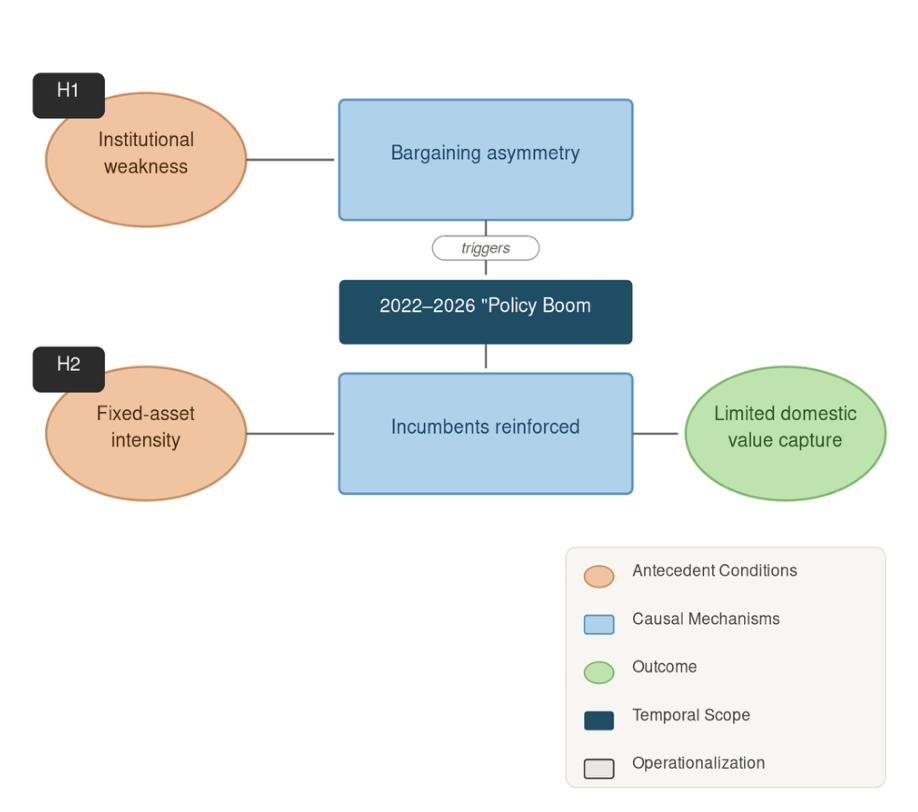
Causal Mechanism
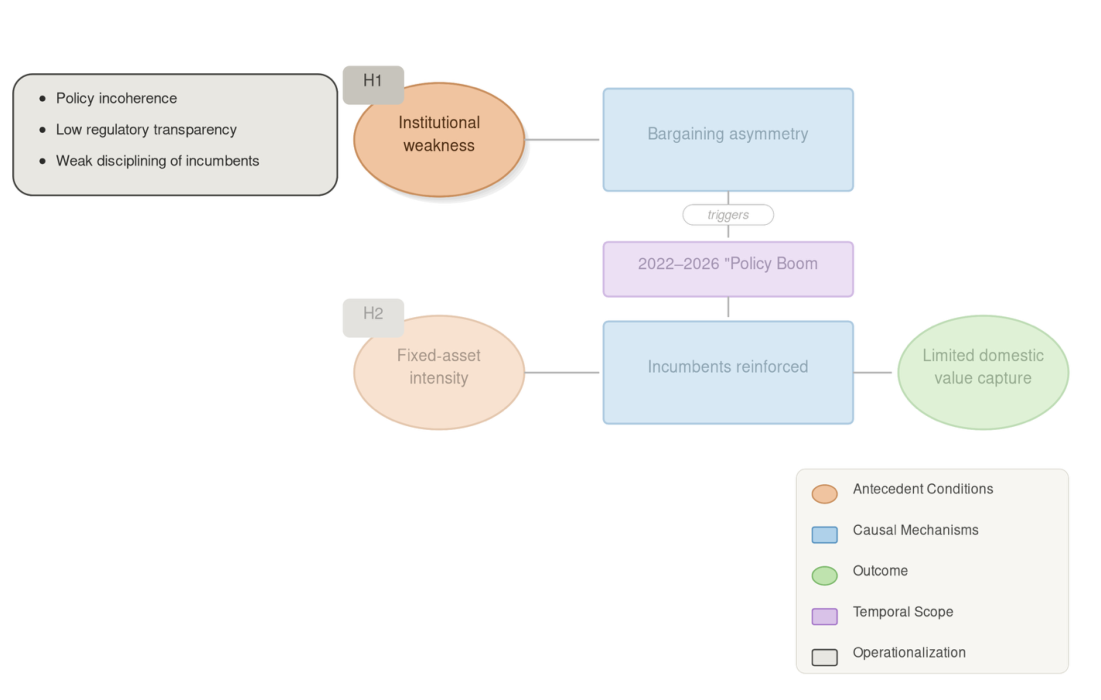
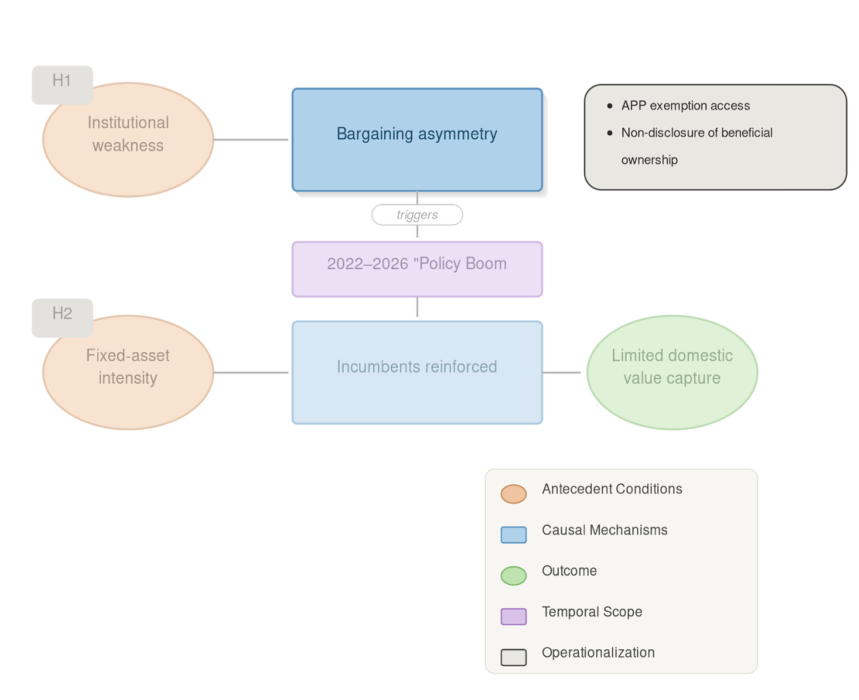
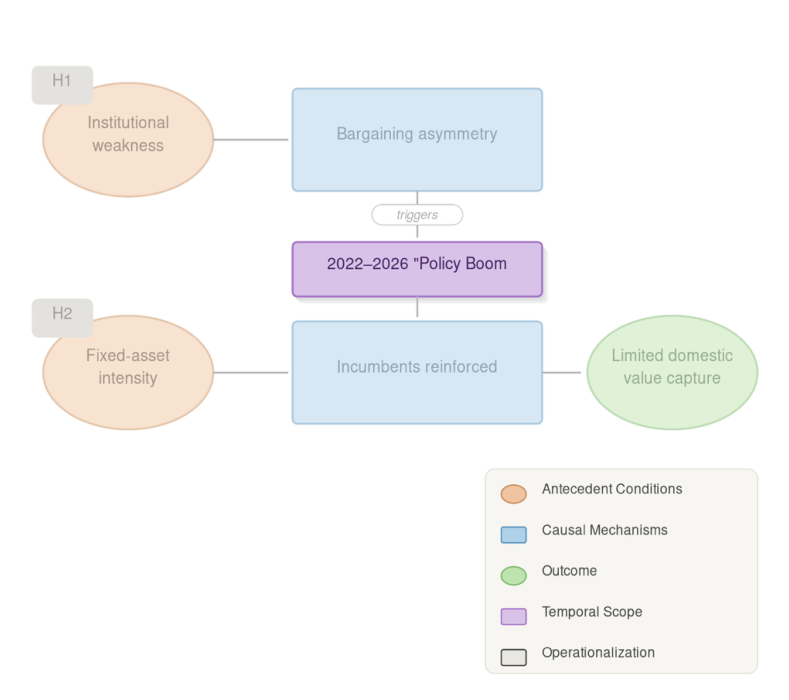
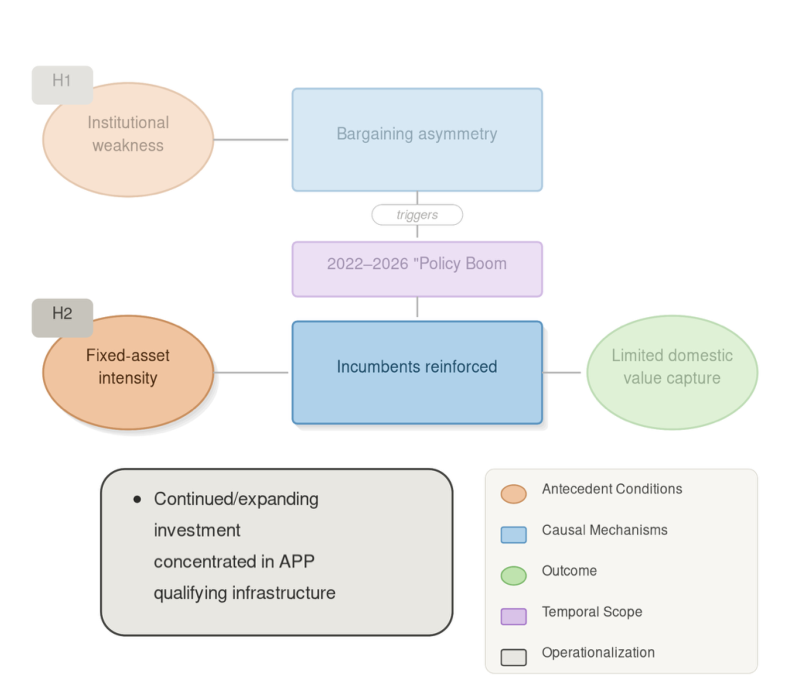
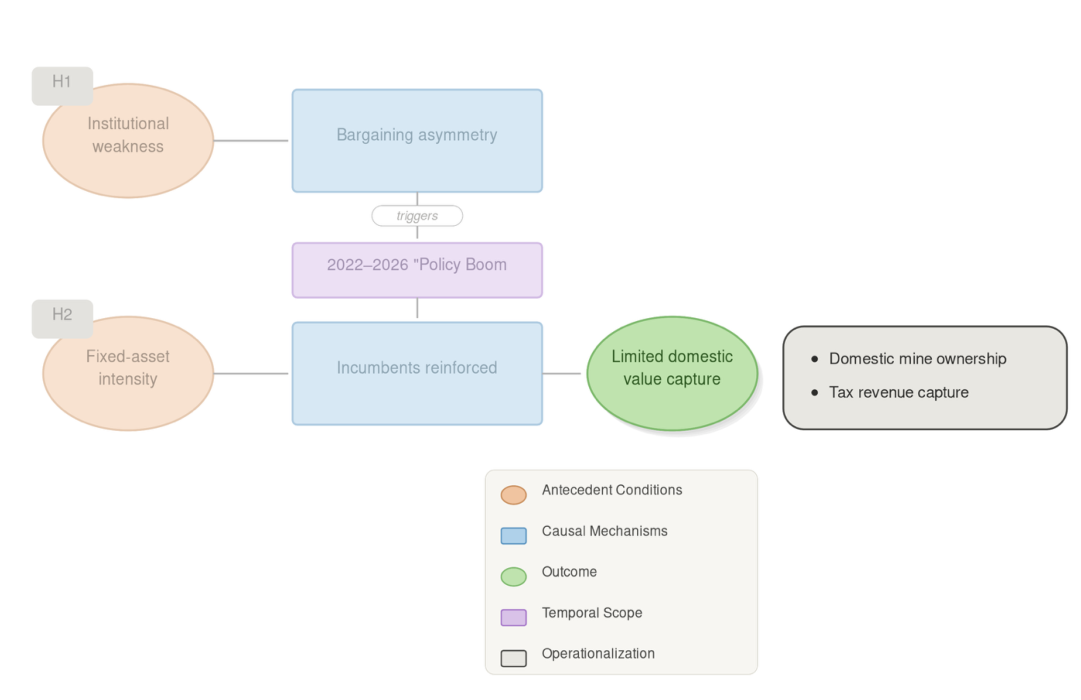
Causal Mechanism Diagram for Limited Value Capture. Author’s own work, created with the assistance of Claude (Anthropic, 2026).
Tap the diagram to enlarge
Dataset 1
Zimbabwean Policy Implementations in Lithium Sector
Select a date to see each policy.
Dec 16, 2022
Statutory Instrument 213 – Base Minerals Export Control (Lithium Bearing Ores and Unbeneficiated Lithium) Order, 2022
Effect
Ban export of raw lithium-bearing ore and unbeneficiated lithium
Required permits granted by Ministry of Mines
Did not apply to lithium concentrate — only raw/unbeneficiated lithium ore was barred.
Exemptions to Policy
Exporting samples for assaying outside Zimbabwe
Written approval of the Minister justifying export under Value Added Tax Act [Chapter 23:12].
Who Procured Permits?
Not officially disclosed Mwandura’s (2023) legal analysis notes that the repeal “does not affect the validity of anything done by the Minister” under the 2022 Order, so exemptions and permits already granted stand; Analysis states three unidentified Chinese companies already building processing plants were exempted from the ban.
Unintended Outcomes
Created framework for later amendments
enforcement gaps such as under-declaration and smuggling prompted 2023 amendment below
Source(s): (Ministry of Mines and Mining Development, 2022) (Mwandura, 2023) (Government of Zimbabwe, 2022)
January 6, 2023
Statutory Instrument 5 of 2023 — Base Minerals Export Control (Unbeneficiated Base Mineral Ores) Order, 2023
Effect
Repeals SI 2022-213 and re-establishes the ban on export of unbeneficiated base mineral ores under a new principal Order
General framework only — does not yet contain lithium-specific provisions or concentrate coverage
Exemptions to Policy
Repeal does not affect exemptions or permits already granted under SI 2022-213
Who Procured Permits?
n/a — general re-enactment; no permits described in this Order itself
Unintended Outcomes
Left a gap for lithium-specific and concentrate enforcement, closed four months later by SI 57 of 2023 (below)
Source(s): Mwandura (2023) Government of Zimbabwe, 2023a)
May 8, 2023
Statutory Instrument 57 of 2023 — Base Minerals Export Control (Unbeneficiated Base Mineral Ores) (Amendment) Order, 2023 (No. 1), 8 May 2023; amends the principal Order (SI 5 of 2023, 6 January 2023), which repealed SI 2022-213 (that repeal did not affect exemptions/permits already granted under it)
Effect
Bans export of unprocessed lithium (spodumene/petalite concentrate) and extends the ban to cathode powders and battery components
Sets minimum lithia (Li content) thresholds for exported concentrate
Regulates domestic trading (licensed buyers only; movement permits required for transport)
Exemptions to Policy
Export permits granted only to operators running an APP or supplying such a facility
Export licenses require approval by both the Minister and the President.
Who Procured Permits?
Huayou (Arcadia), Sinomine (Bikita), and Chengxin (Sabi Star) owned or were constructing processing plants and were exempt from ban.
Unintended Outcomes
Concentrated bargaining leverage in the hands of incumbent Chinese processors already holding APP status (de facto monopsony)
Later entrants without processing plants effectively blocked from export.
Source(s): Mutondoro (2024, as cited in Radomski et al., 2026a) (Government of Zimbabwe, 2023b)
June 10, 2025
Gov announced impending Jan 2027 ban on lithium concentrate (crushed and floated ore)
Effect
Signals transition to allow export of only lithium sulphate and higher-value products from Jan 2027
Concentrate exports to be phased out.
Exemptions to Policy
n/a—announcement of impending policy
Who Procured Permits?
n/a—announcement of impending policy
Unintended Outcomes
n/a—announcement of impending policy
Source(s): (International Energy Agency, 2025)
January 2026
Tiered export tax system
Effect
10% tax levied on raw lithium ore
Further 10% tax on lithium concentrate
Lithium sulphate untaxed — tax burden decreases as domestic value addition increases
Exemptions to Policy
Lithium sulphate exempted from tax (0% rate)
Who Procured Permits?
n/a — an export tax, not a permit-based mechanism
Unintended Outcomes
Further entrenches incumbents in industry and reinforces monopsony to Chinese conglomerates.
Source(s): (Bore, 2026)
February 2026
Blanket suspension of raw mineral exports
Effect
Zimbabwean government suspended all exports of raw minerals, including platinum, coal, chrome, and lithium concentrate
Exemptions to Policy
Not specified in sources
Who Procured Permits?
n/a
Unintended Outcomes
Ban compliance date brought forward to curb malpractice — chiefly artisanal miners' smuggling of unbeneficiated ore
Source(s): (Bore, 2026);
April 14, 2026
Lithium Concentrate Export Quotas
Effect
Gov granted lithium export quotas to six large-scale concentrate producers
Exemptions to Policy
11 conditions for lithium producers on volume, tonnage, export consignments, etc.
Full export access permitted after beneficiation milestones are met
Zimbabwe’s only lithium sulphate plant - 400,000 tons annually and producing at capacity without ability to process lithium from other plants. (International Finance Corporation, 2024); (Philimon Bulawayo, 2026)
(Business and Human Rights Centre, 2026b) (Mining Zimbabwe, 2026a) (Transparency International, 2026)
3January 2022
Bikita Minerals Mine
74% owned by Sinomine Resource Group Co., Ltd. (China)
26% owned by local shareholders (reportedly transitioning to full Sinomine control)
Subsidiary/Joint Venture None
Deposit
11 million tons (1.4%)
Output
Current capacity 300,000 tons of spodumene concentrate Existing petalite plant capacity to be expanded to 480,000 tons of ore annually (EJ Atlas, 2026a); (International Finance Corporation, 2024)
(Business and Human Rights Centre, 2026a) (Transparency International, 2026)
4November 2021
Sabi Star Mine
100% owned by Chengxin Lithium Group (China)
Subsidiary/Joint Venture Max Mind Investments Zimbabwe (subsidiary)
Deposit
6.6 million tons of Lithium and Tantalite ores (Mining Zimbabwe, 2023)
Output
300,000 tons of lithium concentrate per year. (EJ Atlas, 2026b)
(Business and Human Rights Centre, 2026c) (Transparency International, 2026)
52019
Kamativi Lithium Mine
Yahua Group (China)
Defold Mine (PVT) Ltd. (Zimbabwe – member of Mutapa Investment Fund)
Ownership percentages undisclosed
Subsidiary/Joint Venture Kamativi Mining Company - joint venture between Sichuan PD Technology Group (Yahua) and Kamativi Tin Mines Ltd. (Defold)
Deposit
26.7 million tons (China Global South Project, 2019)
Output
2.5 million tons of lithium ore in 2025 (projected as of early 2025) (Mysteel, 2025b)
(China Global South Project, 2019) (Transparency International, 2026)
62019
Sandawana Mines
100% owned by Mutapa Investment Fund (MIF)
Subsidiary/Joint Venture Kuvimba Mining House + Unnamed Chinese investors (joint ownership)
Deposit
39.9 million tons of 1.39% lithium oxide (Shanghai Metals Market, 2026)
Output
343,000 tons in 2025 (Mining Zimbabwe, 2026c) Projected 661,000 tons per year. (Reuters, 2025)
Program Coordination & Administration – Designed, launched, and ran programs and events from concept to delivery, keeping budgets, records, and deadlines on track.
Stakeholder Engagement & Client Service – Built partnerships with senior leaders across business, nonprofit, and government sectors while serving vulnerable communities with care.
Research, Analysis & Writing – Turned research and trade data into policy briefs, Tableau Public dashboards, board briefings, and grant proposals.
02
Education
Master of Arts, International Political Economy
September 2025 – August 2026
University College Dublin – Upper Second Class Honours (2:1)
Thesis: Bargaining Asymmetry and Incumbent Reinforcement: Mechanisms of Limited Domestic Value Capture in Zimbabwe’s Lithium Sector. Grade: A-
Built 2 original datasets from legal texts, institutional reports, trade press, and investigative sources, tracking 6 lithium-sector policy interventions (2022–2026) and ownership of 6 large-scale mines across 7 acquisitions.
Found that institutional weakness produced bargaining asymmetry, compounded by lithium’s high fixed-asset intensity.
Determined that these events converted successive policy shocks into incumbent reinforcement for Chinese firms rather than market exit, thereby limiting domestic value capture from lithium industry.
Bachelor of Arts (Honours), International Development Studies, Minor in Political Science
May 2021 – December 2024
University of Calgary – GPA 3.4/4.0
Thesis: Proposed resource nationalism and sub-regional cooperation to advance development in the Sahel amid shifting Great Power relations. Grade: A
03
Relevant Experience
Grant Writer
September 2026 – Present
United Nations Volunteers | Rousto Charity NGO, Tajikistan (Remote)
Wrote and submitted $9,527.50 TEEEM Foundation Community Impact Grant proposal to train 50 Tajik teachers in TESOL, drafting all sections to funder’s scoring criteria.
Built logframe, risk matrix, and phase-over strategy using SMART objectives for TEEM proposal, also creating foundation for 4 upcoming federal grants.
Built donor-ready budget from Rousto’s unit costs, keeping request within funder’s $5,000–$10,000 tier.
Supportive Housing Property Management
March 2025 – September 2025
The Mustard Seed
Provided administrative and client support to over 240 residents under AHS supportive housing and Alberta RTA lease agreements, showing resilience and adaptability in high-pressure situations.
As one of 3 staff processing rent for over 240 residents, used RealPage and Microsoft Office to process payments, post charges, and reconcile bank deposits with 100% ledger accuracy while ensuring legal compliance in service delivery.
Played critical administrative role in mandatory tenant insurance rollout, enrolling all 240 residents within 3-month deadline through clear communication with residents of varied cognitive and language abilities.
Donations Coordinator (Co-op Work Term and Continuing Role)
June 2023 – September 2025
Red Wing Shoes
Independently created and ran work boot donation program supporting employment programs within NGOs across Calgary, training 11 staff at 2 stores on donation process.
Liaised as primary point of contact with senior leadership at partner organizations – Red Wing Shoes’ franchise owner and regional suppliers, The Mustard Seed’s Donations Coordinators and Employment Services Supervisor, and Fresh Start Recovery’s Director of Fund Development – to coordinate donations.
Maintained inventory and program-tracking database in Microsoft Excel to support growth analysis and product loss tracking for Red Wing franchise owner.
Launched program during 3-month co-op work term, donating 101 pairs across 47 styles during term ($30,000 CAD+ retail value), then scaled operations to deliver more than $100 000 CAD in retail value donated in first year. Program is still operational as of 2026.
Crime Prevention Conference Planner and Researcher
January 2024 – September 2025
ACCPA
Coordinated 2025 provincial conference for roughly 250 delegates from municipalities, Government of Alberta, police agencies, and nonprofits across Alberta.
Allocated conference budget between venue booking and 28-speaker lineup, utilizing research to identify local and international experts for speaker line up.
Conducted transnational research on homelessness and housing insecurity, using findings to select annual theme and build conference speaker list; presented monthly briefings to board members with team.
Analyzed 36 attendee survey responses to inform future programming; served as charter member of Financial Sustainability Committee identifying funding sources.
04
Projects
Canada–Ireland Trade Under CETA: Policy Brief and Tableau Dashboard
October 2026
Independent project | LinkedIn and Tableau Public
Sourced UN Comtrade data, showing two-way goods trade rising from US$1.8bn (2016) to US$4.3bn (2025).
Built interactive Tableau Public dashboard of Canada–Ireland goods trade, 2012–2025, from UN Comtrade data, with 6 linked views.
Wrote 1,500-word policy brief on what full CETA ratification would mean for Canada–Ireland business, citing CETA, 2010 Arbitration Act, and 2026 Amendment, then published brief and dashboard; brief reposted on LinkedIn by Defence Construction Canada team leader.
05
Additional Experience
Sales Associate
December 2021 – February 2025
Red Wing Shoes
Sold over $400 000 CAD in product over 3 years using Salesforce (CRM), frequently exceeding accessory sales targets by 50% or more.
Introduced new daily operating procedures that increased in-store efficiency and decreased losses due to errors.
Used product knowledge to provide friendly customer service and resolve customer complaints with professionalism.
Lead Hand
May 2018 – May 2021
MDL Landscaping
Supervised crews of up to 16 on residential and commercial landscaping contracts, largest worth $110,000 annually; followed blueprints and contract specifications.
Liaised with clients year-round and tracked crew and equipment hours separately on site for accurate client billing.
Led 4-person snow removal crew across 16 residential and commercial sites.
Enforced Alberta Occupational Health and Safety (OHS) standards through toolbox meetings, audit preparation, equipment maintenance and tag-outs, and crew training on safe equipment use.
06
International Experience
Digital Advocacy Volunteer
May 2026 – July 2026
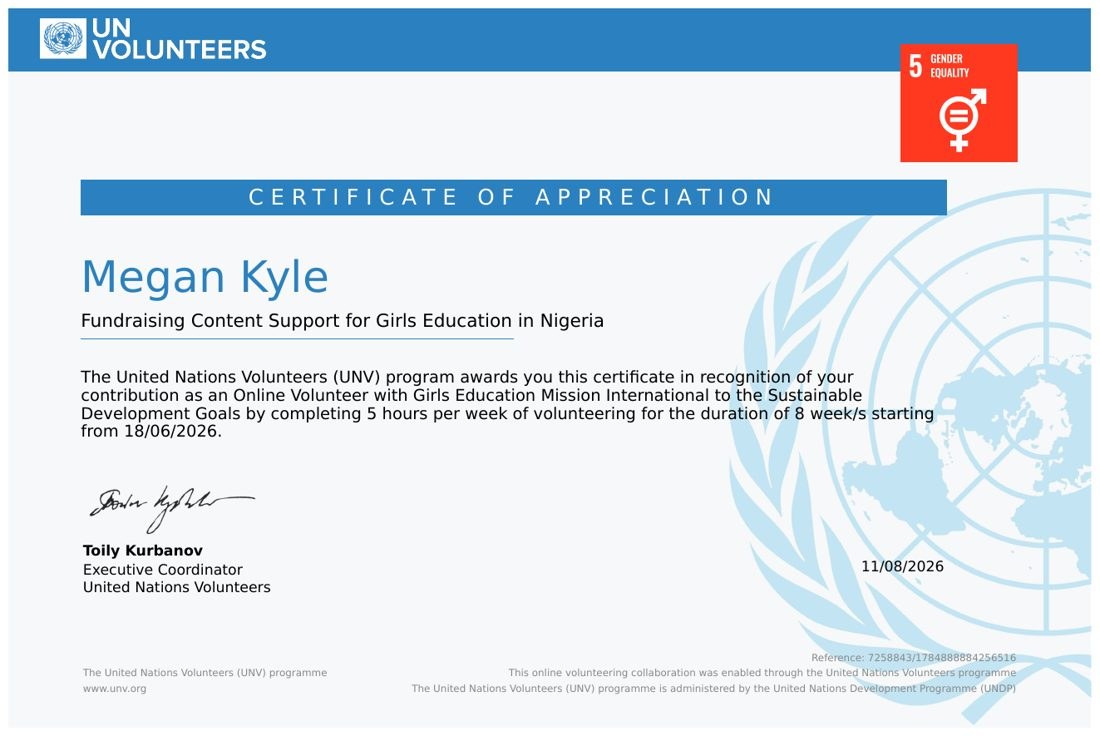
United Nations Volunteers | Girls’ Education Mission, Nigeria (Remote)
Developed digital advocacy content promoting girls’ education in Nigeria for donor campaign across 4 social platforms.
07
Certifications and Training
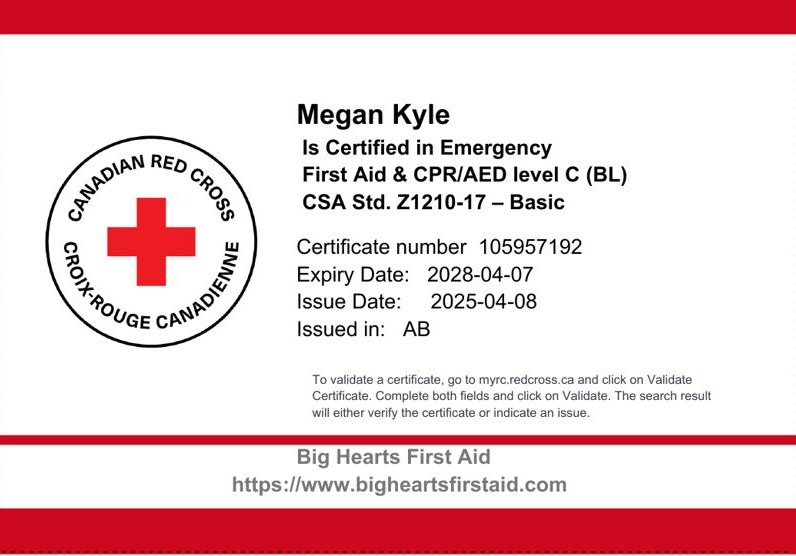
Emergency First Aid and CPR/AED Level C, Canadian Red Cross (April 2025).
Access and Privacy Fundamentals for Alberta Public Bodies, FDARP, HMIS Basics, Naloxone, and Trauma-Informed Care.
08
Languages and Software
English C2 (Native proficiency) and French A2
Microsoft 365 (Word, Excel, PowerPoint, Outlook, Teams, SharePoint, and Copilot), Google Workspace, Zoom, Power BI, Canva, Salesforce, Tableau Public, RealPage, Adobe, and UN Comtrade.
09
Scholarships and Awards
Global Development Studies Honours Program (2023), Jason Lang Scholarship (2023), CNRL Building Futures Scholarship (2023), and Alexander Rutherford Scholarship (2021)
01
Education
Master of Arts, International Political Economy
September 2025 – August 2026
University College Dublin – Upper Second Class Honours (2:1)
Bachelor of Arts (Honours), International Development Studies, Minor in Political Science
May 2021 – December 2024
University of Calgary – GPA 3.4/4.0
02
Research
Master’s Thesis (A-)
Bargaining Asymmetry and Incumbent Reinforcement: Mechanisms of Limited Domestic Value Capture in Zimbabwe’s Lithium Sector
August 2026
Built 2 original datasets from legal texts, investigative sources, and institutional reports (World Bank’s World Development Report, International Finance Corporation, Transparency International), tracking 6 lithium-sector policy interventions (2022–2026) and ownership of 6 large-scale mines across 7 acquisitions.
Found that institutional weakness produced bargaining asymmetry, compounded by lithium’s high fixed-asset intensity.
Determined that these events converted successive policy shocks into incumbent reinforcement for Chinese firms rather than market exit, thereby limiting domestic value capture from lithium industry.
The Risks and Rewards of Disputes on Foreign Direct Investment: A Critical Review of Aggregate National and Disaggregate Sectoral Evidence
March 2026
Conducted comparative literature review on the effects of investor-state disputes on host countries’ ability to attract foreign direct investment (FDI).
Determined that while dispute filing through arbitration courts such as the International Centre for Settlement of Investment Disputes (ICSID) can reduce FDI inflows, non-compliance with bilateral investment treaties (BITs) may increase FDI in high fixed-asset industries (FAI) due to sector-specific investment incentives.
Applied these findings to critical raw material sectors, concluding that the resilience of high FAI industries to legal disputes may become a defining feature of political economy in resource extraction and trade.
A Proposal for a Housing Sector Policy Output Analysis: An Interdisciplinary Review of Efficacious Housing Policy in Industrialized States
November 2025
Conducted comparative public policy analysis of non-market housing systems and housing governance across multiple OECD states.
Compared empirical data from Canadian provinces and territories during housing policy decentralization to evaluate methods for limiting financialization.
Conducted comparative analysis of non-market housing systems in Canada, Austria, and France, examining adaptive reuse, anti-ghettoization measures, and income thresholds’ impact on accessibility.
Contributed strategy-focused analysis of the Canadian housing market, evaluating policy approaches used across OECD states to limit financialization and alleviate housing insecurity.
Behavioral Implications of Control Over Territory and Communications: A Conflict Tracking Exercise on Wagner’s Activities During the Moura Massacre
November 2025
Conducted conflict tracking analysis using reports on private military company (PMC) Wagner’s operations leading up to and during the Moura Massacre to assess political motivations behind activity in the region.
Evaluated key strategic patterns Wagner employs including operational secrecy, partnering with states that have severed Western alliances, and targeting politically strategic civilian groups.
Applied multiple theoretical frameworks to conclude that Wagner functions as a politically motivated instrument for expanding influence in resource-rich states with weak authoritarian or military regimes.
Bachelor’s Thesis (A)
November 2024
Cutting the Marionette Strings: Constraining Great Powers in the Sahel and the Pursuit of Pan-African Solutions to Development in the Alliance of Sahel States.
Researched West African international relations and the implication of Great Power foreign interference in the region as alliances transition from Western to Eastern bloc powers.
Conducted development analysis of M-DIME reports of Russian military and economic activities in West Africa to assess opportunities and threats to development in the Alliance of Sahel States (AES) region.
Proposed regional strategy to manage Russian FDI and foreign interference to increase security, build institutional capacity, and maximize development spillover.
Bringing Power to Bear: An Analysis of the International Trade Regime and Review of the Efficacy of the Global South’s Methods of Resistance From a (Surprisingly Optimistic) Realist Perspective
November 2024
Researched post-WWII international political economy to assess the nature of conflict between the Global North and the Global South in international trade.
Identified relationship of neoliberal policy in IPE on decreased quality of life in Global South and identified widely utilized methods of protest.
Proposed that while violence is a common means of protest, a more efficacious means of resistance is non-aligned intergovernmental groups that increase bargaining positions against Great Power nations.
Holding Africa Against a Western Legal Yardstick: A Marxist Analysis of the Impact of Western Jurisprudence in International Law
July 2024
Reviewed the history of international jurisprudence and its implications for International Court of Justice (ICJ) cases against African states.
Conducted quantitative legal analysis using datasets on ICJ references to domestic law to assess asymmetries in the application of African peremptory norms.
Evaluated how ICJ proceedings disproportionately reference non-African domestic law and assessed implications for institutional legitimacy in global governance.
A Critical Analysis of Homelessness in the Global North: Transitioning From Neoliberal Policy Into Government Spending That Decreases Marginalization (Grade: A)
April 2024
Conducted interdisciplinary review of Housing First literature, public health data, and social policy interventions addressing chronic homelessness in Global North states.
Determined that Housing First models are effective for many, but insufficient as standalone interventions, requiring long-term policy shifts away from neoliberal housing policy.
Applied findings to prepare policy research and executive summary for ACCPA’s 2025 pre-conference planning segment on homelessness as a social determinant of crime.
An Analysis of Factors Contributing to Ethiopian Sovereignty and Kenyan Colonization
November 2023
Conducted most similar systems qualitative comparative analysis of Ethiopia and Kenya to examine factors that influenced divergent outcomes under European imperial expansion.
Reviewed historical analyses to identify economic, political, and military structures within ethnic groups of each nation to assess how internal structures shaped capacity for resistance to colonial influence.
Concluded that Ethiopia’s religious legitimacy across Christian and Islamic communities, combined with state consolidation through Menelik II expansionist efforts, supported the development of more consolidated military capacity and strong institutions, compared to Kenya’s fragmented resistance movement shaped by colonial underdevelopment.
Discourse on Decolonization in the Academy and Legislature: A Critical Analysis on Decolonizing Animal Wellness
November 2023
Analyzed traditions of animal wellness and hunting practices across multiple Indigenous bands in North America.
Conducted legal discourse analysis of animal welfare frameworks in Canada and the United States through cases such as Bill C-10B, the Nunavut Wildlife Act, and the Makah people’s fight for whaling rights.
Concluded that Indigenous epistemologies provide alternative frameworks for animal rights that should be utilized in Western settler jurisprudence to increase Indigenous self-determination.
03
Publications and Projects
Canada–Ireland Trade Under CETA: Policy Brief and Tableau Dashboard
October 2026
Independent project | LinkedIn and Tableau Public
Built and published interactive Tableau Public dashboard of Canada–Ireland goods trade, 2012–2025, from UN Comtrade HS 2- and 4-digit data, with 6 linked views, including annotated trend, top exports, and 2016 vs 2025 sector comparison.
Sourced UN Comtrade data, including partner-reported mirror figures, and let data define sectors, showing two-way goods trade rising from US$1.8 billion (2016) to US$4.3 billion (2025).
Directed, revised, and published 1,500-word policy brief on what full CETA ratification would mean for Canada–Ireland business, grounded in primary legal texts (CETA, Arbitration Acts 2010 and 2026, Council Decision (EU) 2017/38).
Scoped analysis against ICBA and government trade priorities and set source-verification standard; brief reposted on LinkedIn by Defence Construction Canada team leader.
Mexico–Canada Trade Strategy White Paper (Co-author)
March 2026
University College Dublin
Analyzed T-MEC and CPTPP to understand existing multilateral trade agreements between 2 nations.
Co-wrote white paper proposing Mexico–Canada trade strategy amid US tariff volatility, recommending non-equity financing as strategy to facilitate transition of Mexico’s lithium and silver industries into domestic refining.
Recommended utilizing Canadian mining technology and skilled labor, as well as export tariffs on unrefined silver, to maximize domestic value capture in critical minerals.
04
Presentations
Decreasing Forest Fire Vulnerability in the Dandenong Ranges of Melbourne, Australia Through Indigenous Leadership and Pedagogy
April 2024
Researched history and risk factors of bushfire vulnerability in the Dandenong Ranges of Victoria, Australia.
Applied Indigenous Wurundjeri pedagogy and land management strategies including fire breaks, strategic planting, and drone ecosystem monitoring to develop a proposal mitigating fire risk due to high-density mountain ash population.
Proposed Indigenous-led land management and leadership framework that would facilitate self-determination of Wurundjeri peoples while decreasing forest fire vulnerability in the state of Victoria, Australia.
ACCPA’s 2025 Community Crime Prevention Conference: A Pre-Conference Planning Report
April 2024
Contributed to group literature review on the crime and community wellness landscape in Alberta, Canada to identify social determinants of crime including homelessness and the housing crisis.
Compiled executive summary integrating research findings from a six-member team, alongside proposed conference itinerary, speakers and alternates, venues, and workshop programming.
Presented findings to ACCPA board members and supported ongoing conference planning process, transitioning from researcher to conference coordinator role.
05
Teaching Experience
Educational Role in Boot Donation Program
June 2023 – September 2025
Trained 11 Red Wing staff across 2 stores on donation process, including completing Retail Merchandise Management (RMM) forms, identifying boots eligible for donation, and marking donated boots as non-returnable.
Informed Red Wing executives on value of engaging The Mustard Seed to help reduce corporate waste.
Advocated to Red Wing executives on behalf of The Mustard Seed’s employment program.
This brief is written ahead of the High Court hearing that opens on 27 October 2026 and will shape when Ireland ratifies CETA. It sets out what full ratification would mean for both countries: for Canadian firms trading with and investing in Ireland, and for Irish firms doing the same in Canada.
An accompanying interactive Tableau Public dashboard lets readers explore the Canada–Ireland trade data behind this brief.
Key Points
CETA’s trade provisions have applied provisionally since September 2017, so tariff-free access does not depend on the court case. Ratification decides whether that access rests on a permanent footing, and whether investors gain treaty protection.
Ratification now has a target date. Borderlex reported on October 22 that Ireland’s Trade Minister, Helen McEntee, said Ireland aims to ratify by the end of 2026, subject to a High Court ruling expected the following week.
For Canadian firms, the prize is investment protection. Canada and Ireland have no bilateral investment treaty in force, so CETA’s Investment Court System would give Canadian investors in Ireland a treaty-based route they do not currently have.
Canada’s goods exports to Ireland doubled between 2016 and 2025, led by corn and aircraft engines. Two-thirds of Ireland’s exports to Canada are life sciences. Neither flow needs ratification to continue.
The Benchmark: What Governments and Businesses Have Asked For
On 13 June 2026 in Dublin, Prime Minister Carney and Taoiseach Martin called for “predictable, rules-based trade grounded in international law” and “welcomed Ireland’s progress towards ratification” of CETA. They cited Ireland as the “8th largest investor in Canada” and Canada as the “14th largest investor in Ireland”, with Canadian companies employing 26,000 people in Ireland and Irish companies over 30,000 in Canada.
On 22 October in Dublin, celebrating the tenth anniversary of CETA’s signing, Canada’s Minister of International Trade, Maninder Sidhu, met Helen McEntee, Ireland’s Minister for Foreign Affairs and Trade. McEntee said Ireland aims to ratify by year end. According to Global Affairs Canada’s readout, Sidhu emphasized that Ireland’s ratification would send a strong signal of shared commitment to rules-based trade. Borderlex quoted Sidhu as saying: “Every step towards all 27 locks in certainty for workers and businesses on both sides of the Atlantic.” The readout calls Ireland the fifth-largest destination in Europe for Canadian direct investment and names security as a strategic sector. He added that Ottawa was considering help for small businesses to attend European trade shows.
On 30 June, the Ireland Canada Business Association (ICBA) called for “full ratification of the EU-Canada trade agreement CETA; a concerted push to attract Canadian investment into Ireland’s innovation sectors; deeper collaboration in AI, life sciences and clean technology; improved direct air connectivity between the two countries; and more structured support for Irish companies entering the Canadian market.”
This brief tests these priorities against the trade data and asks which depend on ratification.
Where Ratification Stands
CETA is a “mixed” agreement. Under Council Decision (EU) 2017/38, only Articles 8.1–8.8, 8.13, 8.15 and 8.16 of the investment chapter apply provisionally, and only to foreign direct investment. The investment protection standards and the Investment Court System take effect only when CETA fully enters into force, which requires ratification by every member state. Eighteen of 27 have ratified. Ireland is one of nine yet to do so, alongside Belgium, Bulgaria, Cyprus, France, Greece, Hungary, Italy and Poland.
In Costello v Government of Ireland (2022), the Supreme Court held by 4–3 that Ireland could not ratify CETA as Irish law then stood, because CETA Tribunal awards would be binding and enforceable in Irish law. By 6–1, it held that amending the Arbitration Act 2010 along the lines set out by Hogan J. would allow ratification without breaching the Constitution.
The Arbitration (Amendment) Act 2026, signed on 17 June, takes that route. Its new section 25A makes awards under CETA enforceable only “by leave of the High Court”, and an award “is not, and never was, enforceable” where enforcement would compromise the State’s constitutional order or the autonomy of the EU legal order. No commencement order has been found.
Ratification still needs a separate Dáil vote, and McEntee says Ireland aims to ratify by the end of 2026. MEP Lynn Boylan is seeking a High Court injunction to block the Act. Borderlex reported on 22 October that a ruling was expected the following week, alongside the Canada– EU Summit in Montréal on 29–30 October. The end-of-year target depends on that ruling.
Certainty, Not Access
For a Canadian exporter, little changes on the day of ratification, because trade between Canada and Ireland is mainly tariff-free. Critics, including the challenger in Costello, argue that tribunal awards could deter Irish law-making, a “regulatory chill”. Supporters answer that provisional application is not permanent: the Council applied CETA “pending the completion of the procedures for its conclusion”, and either side may end it by written notice (Article 30.7.3(c)). Both sides accept the same facts; they differ on what certainty is worth. The difference is sharpest for investment. Today a Canadian firm in Ireland relies on Irish courts and EU law, which businesses rate highly. As one Canadian firm told the Conference Board of Canada for its 2025 report Beyond Barriers: “You need to believe that the rule of law will be upheld.” Ratification would add fair and equitable treatment and compensation at fair market value for any expropriation (Articles 8.10 and 8.12). It would also give a way to enforce these and the non-discrimination rules already applied: claims before a permanent tribunal with an appeal tribunal, open hearings, and damages capped at actual loss (Articles 8.27–8.41). It is a last resort, since claimants must first consult, wait 180 days and drop parallel court actions (Articles 8.19 and 8.22). The protection runs both ways, covering Irish firms in Canada too.
Ireland’s Act adds one qualification. CETA requires awards to be honoured “without delay” (Article 8.41.2) but leaves execution to local law (Article 8.41.4). Section 25A uses that space to reserve a constitutional override. In Costello, Charleton J., the lone dissenter on this point, warned that such an amendment would contradict CETA and could be overridden by EU law; the other six judges accepted the route. Ratification would bring certainty closer but would not complete it.
What the Trade Data Shows
On Canada’s figures (UN Comtrade), two-way goods trade rose from US$1.8bn in 2016 to US$4.3bn in 2025, an increase of about 135%. That sits close to Global Affairs Canada’s figure of bilateral merchandise trade “up nearly 150%” since CETA’s introduction. Canada’s exports to Ireland doubled to US$772m, and Ireland’s exports to Canada rose 142% to US$3.5bn. Ireland’s own statistics record more imports from Canada (US$1.8bn in 2025); this brief uses Canada’s figures and does not explain the gap.
Three sectors stand out in the data, and each meets a stated priority.
Agri-Food (Driven by HS 1005: Corn/Maize)
. Canadian agri-food exports to Ireland rose from US$35m in 2016 to US$287m in 2025, 37% of the total. Corn alone was worth US$224m. The June leaders’ statement committed to an agri-food investment partnership. Ratification changes no tariffs here; its value is protection for Canadian investment in Irish feed, processing or agtech.
Life Sciences (Driven by HS 3002: Pharma & Biologics and HS 9018: Medical Instruments)
Pharmaceuticals, medical instruments and organic chemicals made up 66% of Ireland’s exports to Canada in 2025 (US$2.3bn), led by biologics and vaccines at US$840m. The new Pharmaceutical Supply Chain and Resilience Dialogue and the CASTL–NIBRT training partnership are the channels. For Canadian firms building capacity in Ireland, ratification would protect long-lived assets, although compulsory licences and other intellectual property measures consistent with TRIPS are carved out of the expropriation rule (Article 8.12(5)–(6)).
Industrial Machinery & IT Infrastructure (Driven by HS 8471: Computers & Servers and HS 8411: Aircraft Engines)
Canada’s exports of aircraft engines and turbines rose from US$9m in 2024 to US$73m in 2025, consistent with Ireland’s role as an aircraft-leasing hub. Irish exports of computers and servers jumped from US$5m to US$599m in the same year, representative of the global boom in AI and data center infrastructure as this trend continues into 2026.
Goods data cannot measure Canadian investment in Irish innovation sectors, AI collaboration, or support for Irish firms entering Canada. Investment figures are the better guide; Beyond Barriers estimates Canadian direct investment flows into Ireland at just over US$19bn in 2024. AI collaboration gains a channel at EU level: both sides expect to finalise a digital trade agreement in Montréal and have stated plans to cooperate on AI. Security, newly named by both ministers, does not appear among leading goods flows. Air connectivity depends on airline economics rather than CETA, although Air Canada’s planned Shannon–Toronto service from June 2027 supports that priority.
Scenarios After 27 October
If the court declines to block the Act, the Government could give notice and seek Dáil approval, meeting the year-end target. Ireland would become the nineteenth ratifying state, but the investment chapter would still wait for the other eight.
If the court stops the Act, appeals and delay would likely follow, and the end-of-year target would slip. The EU–Chile agreement, also covered by the Act, would be affected.
In either case, CETA’s trade terms continue to apply.
Implications for Canadian Business
Exporters: access is unchanged. Corn, aircraft engines and hardware shipments continue under existing CETA terms, and Ottawa’s planned trade-show support could help smaller Canadian firms reach Irish buyers.
Investors: plan for ratification as a likely gain in certainty within months, not a guaranteed one. Eight other member states must still ratify, and section 25A adds an Irish-specific step at enforcement.
Channels available now: the pharmaceutical supply chain dialogue, the agri-food partnership, the expected EU–Canada digital trade agreement and ministerial engagement on strategic sectors go ahead whatever the court decides.
Dates to watch: the ruling expected the week of 26 October, the Canada–EU Summit on 29–30 October, any Dáil vote before year end, and ratifications in the remaining member states.
Sources
Primary Sources
Comprehensive Economic and Trade Agreement (CETA) between Canada, of the one part, and the European Union and its Member States, of the other part. OJ L 11, 14.1.2017, pp. 23–1079. EUR-Lex
Council Decision (EU) 2017/38 of 28 October 2016 on the provisional application of CETA. OJ L 11, 14.1.2017, pp. 1080–1081. EUR-Lex
Arbitration (Amendment) Act 2026 (No. 13 of 2026). Houses of the Oireachtas (PDF)
Costello v Government of Ireland [2022] IESC 44, Supreme Court of Ireland, 11 November 2022.
Joint Statement on advancing the Canada–Ireland Partnership, Dublin, 13 June 2026. gov.ie
Global Affairs Canada, “Minister Sidhu meets with Ireland’s Minister for Foreign Affairs and Trade and Minister for Defence”, readout, 23 October 2026. canada.ca
Reports and News
Ireland Canada Business Association, Autumn 2026 newsletter (Air Canada Shannon– Toronto service from June 2027) irelandcanada.com
Ireland Canada Business Association, press release on five priorities for Canada–Ireland trade, 30 June 2026. irelandcanada.com
Conference Board of Canada, Beyond Barriers, September 2025.
Robert Francis, “Ireland to ratify EU-Canada trade deal by end of year”, Borderlex, 22 October 2026. borderlex.net
Data
United Nations, UN Comtrade Database: Canada as reporter, Ireland as partner, HS 2- digit (2012–2025) and HS 4-digit (2023–2025), current US$. Ireland’s own reported imports from Canada (US$1.8bn in 2025) are from the same database, with Ireland as reporter and Canada as partner. comtradeplus.un.org
Mechanisms of Limited Domestic Value Capture in Zimbabwe’s Lithium Sector
Megan Kyle · School of Politics and International Relations, University College Dublin · Submitted in partial fulfilment of the requirements for the degree of Master of International Political Economy
“Every people have shown a capacity for independently increasing their ability to live a more satisfactory life through exploiting the resources of nature.”Walter Rodney, How Europe Underdeveloped Africa
Acknowledgements
I extend my gratitude to my thesis advisor, Dr. Krishna Vadlamannati, for his insightful feedback and unwavering support throughout my research. His extensive academic experience contributed significantly to my research.
My appreciation also goes to Dr. Caesar Apentiik for his profound influence during the formative years of my education. Our conversations shaped my worldview by giving me perspective on a world I had only just begun to occupy.
Lastly, I would like to thank the peers who make up my academic community. Your enthusiasm for research and your camaraderie has remained a constant source of inspiration throughout this journey.
List of Figures
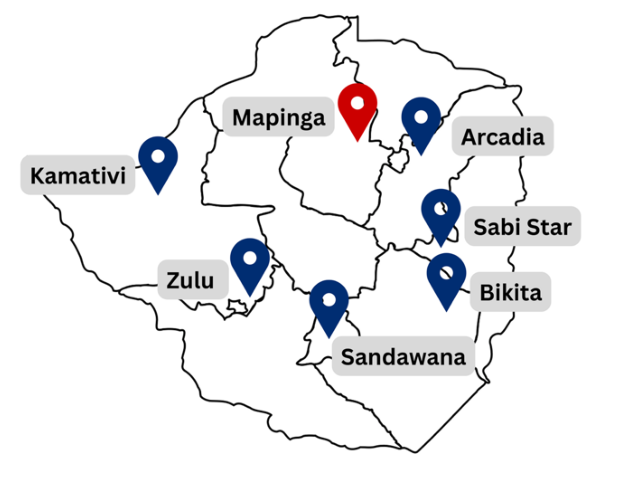
Figure 1: Map of Lithium Mining Sites in Zimbabwe (Source: Radomski et al., 2026a)Figure 2: Causal Mechanism Diagram for Limited Value Capture. Author’s own work, created with the assistance of Claude (Anthropic, 2026)
List of Abbreviations
APP
Approved Processing Plant
FAI
Fixed-Asset Intensity
KMH
Kuvimba Mining House
MIF
Mutapa Investment Fund
WDR
World Development Report
ZJAR
Zimbabwe Journal of Applied Research
Summary
The influx of Chinese investment in Zimbabwe’s lithium sector between 2022 and 2026 has prompted a rapid sequence of export restrictions intended to convert mineral extraction into domestic value capture. This paper asks how does institutional weakness generate the bargaining asymmetry and incumbent reinforcement that produce limited domestic value capture in Zimbabwe’s lithium sector? While debt diplomacy literature argues that the structure of Chinese capital investment is a primary determinant of developmental outcomes; this paper argues that Zimbabwe’s institutional capacity, measured as policy cohesiveness, regulatory transparency, and the disciplining of incumbents, determines whether capital translates into domestic value capture, measured as domestic ownership share and tax revenue capture.
Building on the World Bank’s (2024) World Development Report (WDR) and the obsolescing-bargain model, the first hypothesis (H1) holds that weaker institutional capacity increases bargaining power asymmetry favouring incumbents and reducing domestic value capture. Drawing on Jung, Owen, and Shim’s (2021) theory of co-industrial disputes, the second hypothesis (H2) holds that because lithium mining and processing are high fixed-asset intensity (FAI) industries, each instance of policy reactivity in Zimbabwe’s “Policy Boom” should increase, rather than deter, investment from Chinese firms.
Using process tracing across a critical review of the literature, a compiled timeline of Zimbabwean statutory instruments, and lithium-mine ownership records, this paper finds that institutional weakness is the antecedent condition that produces bargaining power asymmetry which triggers reactive policy from the Zimbabwean government. Policy incoherence, low regulatory transparency, and weak disciplining of incumbents give incumbents a bargaining advantage over entrants and small-scale miners, and lithium’s high FAI compounds that advantage by making incumbent exit costly, so that each of the six policy implementations in the 2022-2026 “Policy Boom” has reinforced incumbent positions and overall limited domestic value capture, indicative by domestic mine ownership rates and tax revenue capture.
Zimbabwe has emerged as a major global supplier of lithium; it is home to 0.6% of the world’s lithium deposits and accounted for 10% of global lithium production in 2025. (Radomski et al., 2026b) Global shifts toward greener energy sources have increased demand for transition minerals, such as lithium, to produce Electric Vehicles (EVs) and rechargeable lithium-ion batteries, which are used in consumer electronics and grid energy storage for wind and solar farms. This shift stands to advantage Zimbabwe, as the International Finance Corporation (2024) identifies lithium mining and processing as one of the three primary sectors with potential for private sector investment and structural transformation in Zimbabwe.
While Zimbabwe represents a major upstream supplier in the global lithium market, China is a powerhouse in downstream production, constituting 60% of the world’s lithium refining capacity, and 70% of all lithium-ion battery production, and is the world’s leading producer of EVs. (Radomski et al., 2026a) They sustain this level of production through imports from Australia, Chile, Argentina, and increasingly from Zimbabwe. (Radomski et al., 2026b) China’s reliance on lithium to produce down-stream green energy products has led to a surge in mine acquisitions in the Zimbabwean lithium sector that began rapidly increasing in 2022 (See Appendix 2).
The influx of Chinese capital in Zimbabwe’s lithium sector has prompted a rapid sequence of export restrictions intended to convert mineral extraction into domestic value capture (See Appendix 1). While the literature on Chinese debt diplomacy in Zimbabwe argues that the structure of Chinese financing—resource-backed loans and opaque debt instruments, is a causal driver of development outcomes in the lithium sector (or lack thereof), this paper explores how does institutional weakness generate the bargaining asymmetry and incumbent reinforcement that produce limited domestic value capture in Zimbabwe’s lithium sector?
The policy and practitioner literature diagnoses Zimbabwe’s institutional weaknesses in detail but does not identify a causal mechanism behind limited domestic value capture in the lithium sector. The debt-diplomacy literature locates a causal force in the structure of Chinese financing rather than primarily in Zimbabwean institutional capacity but does not identify why investment from incumbent Chinese firms has continued to increase through a sequence of policy shocks rather than retreating from them.
Building on the institutional theory framework in the World Bank’s (2024) WDR; H1 holds that weak institutional capacity—policy incoherence, low regulatory transparency, and weak disciplining of incumbents—increases bargaining power asymmetry favoring incumbents, and as policy shocks reinforce incumbent advantage, this corresponds to limited domestic value capture measured as domestic mine ownership and tax revenue capture throughout the 2022-2026 “Policy Boom”. Drawing on Jung, Owen, and Shim’s (2021) theory of co-industrial disputes, the second hypothesis (H2) holds that because lithium mining and processing are high FAI industries, incumbent Chinese firms holding Approved Processing Plant (APP) status face negligible marginal risk from each successive policy shock in the 2022-2026 “Policy Boom”, therefore each shock should coincide with continued or expanding investment by incumbents, concentrated specifically in APP qualifying infrastructure, rather than new market entrants.
This paper argues that both patterns are explained by a single causal chain that results in limited domestic value capture. Institutional weakness—operationalized as policy incoherence, low regulatory transparency, and weak disciplining of incumbents—produces bargaining advantages for Chinese firms and Zimbabwean elites already positioned in the sector at the expense of prospective competitors, which triggers reactive policy from the Zimbabwean government. Lithium mining and processing are high FAI industries, meaning that incumbent firms’ bargaining advantage is not eroded by the state’s attempts to reassert control through policy. Each successive policy shock reinforces incumbent advantage rather than forcing incumbent exit, since exiting a high FAI industry is more costly than absorbing another round of regulatory disruption. The result, sustained across the 2022–2026 boom, is a sector in which mine acquisitions and lithium sector investment in beneficiation have increased substantially while domestic value capture—measured here as domestic ownership and tax revenue capture throughout the 2022-2026 “Policy Boom”—has remained limited.
The paper proceeds in five analytical sections, each tracing a defined segment of this causal chain: institutional weakness as an antecedent condition, established through policy incoherence (paragraph one); its conversion into bargaining asymmetry for both Chinese incumbents and Zimbabwean elites (paragraph two); the escalating sequence of policy interventions that make up the 2022–2026 “Policy Boom” (paragraph three); the role of FAI in explaining why these policy shocks have deepened, rather than dislodged, incumbent positions (paragraph four); and the resulting limits on domestic value capture, measured as domestic mine ownership and tax revenue capture (paragraph five).
Literature Review
Two Overarching Bodies of Literature
The literature on developmental outcomes in Zimbabwe’s lithium sector fits into two categories—the first category is policy and practitioner literature and the second is debt-diplomacy literature, specifically from the Zimbabwe Journal of Applied Research (ZJAR). Empirical data in the scholarship is primarily sourced from development finance institutions (International Finance Corporation, 2024; World Bank, 2024), anti-corruption NGOs (Transparency International, 2026), academic policy centres (Radomski et al., 2026a; Radomski et al., 2026b), and investigative watchdogs (The Sentry, 2024; The Sentry, 2026) These sources are doing the diagnostic work in the lithium sector in lieu of the Zimbabwean government, as per the low regulatory transparency claim in H1. The scholarship that is domestic to Zimbabwe paints a narrative that the structure of Chinese financing in the lithium sector is causal to developmental outcomes, while placing less emphasis on the strength of Zimbabwean institutions than the findings in the causal chain in this paper suggests is necessary.
Theoretical and Empirical Basis
Development finance institutions (World Bank, 2024) and academic policy centres (Radomski et al., 2026a; Radomski et al., 2026b) are mutually informative in developing the theoretical and empirical basis in the scholarship.
The World Bank’s (2024) WDR supplies a macro-level analysis within the literature for understanding the policy landscape in mineral rich middle-income countries that can lead to and exacerbate slow economic growth, highlighting failure to reinvest export revenue in infrastructure as a major risk. The report advises middle income countries seeking economic development to strike a balance between entrants and incumbents to ensure that incumbents and elites do not uphold the status quo and promote policy that reinforces the power of existing institutions and firms while limiting access to market entrants that have the potential to innovate within a sector. According to this report, middle-income countries are obligated to successfully navigate 2 transitions to create economic structures that can sustain high income levels—advancing from a 1i strategy of investment, to a 2i strategy of investment and infusion, which entails infusing technologies from abroad domestically. Secondly, including innovation in a 3i strategy, where countries engage in high-level downstream production and capital innovation to generate economic complexity and successfully pull away from raw resource extraction. This paper goes on to outline policy mechanisms that can be employed by middle-income countries through disciplining incumbents, destroying outdated institutions upholding an inefficient status quo, rewarding merit and decoupling emissions from growing economies to ensure sustainable energy growth.
The structural and cross-national nature of this report defines both its strength and its limit, while it is broadly applicable to middle-income countries struggling to create institutions that can sustain high income levels, and offers a useful vocabulary for operationalizing concepts such as market contestability and incumbent disciplining, it does not specify what its recommendations would look like at the national or sectoral level, and lacks the granularity and empirical data needed to test its own logic against a single case.
The mixed-method empirical data provided by Radomski et al. (2026a) is foundational scholarship on Zimbabwe’s current mineral governance in the lithium sector. This study employs a 230-respondent survey across six mining sites, key stakeholder interviews including government ministries to Huayou Cobalt and Kuvimba Mining House (KMH), and a comparative literature review between South Africa and Namibia. This report offers a sector-specific diagnostic documenting the sector’s colonial-era legal framework, its overwhelmingly upstream orientation, and the infrastructure bottlenecks in power, rail, and water that constrain beneficiation. Ultimately, this work concludes that existing mining policies are fragmented, reactive, and often introduced without consultation with stakeholders such as academia or civil society and concludes through survey data that communities are generally being disadvantaged socially and environmentally.
This paper advises that the Zimbabwean government should use the Mutapa Investment Fund (MIF) to play a strategic role in mobilizing the development of side stream infrastructure and other services through mining company agreements, and that small-scale and artisanal mining should be included and regulated in the economy given their significance to livelihoods and ability to stimulate local economies. Considering its multi-level analysis as well as sectoral specificity, this report is both methodologically and empirically robust in diagnosing phenomena within Zimbabwe’s lithium sector.
Radomski et al.’s report establishes the empirical existence of institutional weakness in Zimbabwe’s lithium sector using operationalizations consistent with the WDR’s framework, documenting policy asymmetries that structurally benefit incumbents through differential permitting access and thereby reducing both market contestability and incumbent discipline in practice.
Empirical Overview of Mining Sector
Intergovernmental organizations and non-governmental organizations span multi-level analyses, each contributing a different degree of resolution to the picture of institutional weakness and the effect of high FAI industries which leads to the low domestic value capture that this paper traces.
Comparative macro-analysis that benchmarks Zimbabwe’s growth against structurally similar peers (Cambodia, Côte d’Ivoire, Ethiopia, Kenya) identifies three primary sectors for growth including agriculture, tourism, and mining. This contributes a broad-spectrum view of Zimbabwe’s economy and locates the developmental potential of mining within it. (International Finance Corporation, 2024) Lithium sector governance is represented by a governance-risk mapping report (Transparency International, 2026) that engages in stakeholder interviews, secondary literature, and formal governance risk assessment reviews. This report culminates in highlighting major players with equity stakes in lithium ventures and point to the absence of mining-rights approval processes, illustrating a lack of regulatory transparency. At the most granular level, an investigative watchdog organization compiled their analysis on a single transaction—the USD$1.6bn KMH buyout from private investors. Based on leaked Sotic records, Zimbabwe corporate registry findings, and source interviews reconstructs the specifics of this transaction and identifies critical players among the private investors involved, as well of the implications of the largely inflated share price that the shares sold for. (The Sentry, 2024) Due to the lack of regulatory transparency postulated in H1, there is a lack of government reporting on the sale and purchase of government assets including mine acquisitions and KMH shares, and much of the empirical data in this sector comes from organizations outside the Zimbabwean government.
Debt Diplomacy
From within Zimbabwe, the debt-diplomacy literature offers a genuinely causal argument but locates a causal force in the structure of Chinese firms’ capital investment. Nhlabano and Shumba (2025) trace the socioeconomic ramifications of Chinese lending, from constrained access to healthcare to elevated crime, back to the structure of that lending itself, recording 83 corruption-related criminal cases in that quarter, as well as a Chinese firm that built a cement grinding facility near an educational institution that compromised the health of individuals there. (ZIMSTAT 2024, cited in Nhlabano and Shumba, 2025) Munemo and Chisi (2025) frame the relationship as a continuation of colonial extraction, arguing that opaque Chinese loan terms have entrenched Zimbabwe’s debt crisis by design, highlighting the secrecy in the repayment terms and attributing the spike in Zimbabwe’s debt to Chinese lending. Moyo and Moyo (2025) document specific instances of undisclosed resource-backed lending, including a USD$200 million loan to the state power utility that never appeared in the national budget, raising concerns about fiscal transparency. Rwodzi (2025) goes furthest in implicating domestic actors, describing a process of ‘Sinofication’ in which Zimbabwean elites are treated as willing collaborators in, rather than victims of, this arrangement. This literature is indispensable for establishing the empirical record of opacity and elite complicity that this paper draws on directly, particularly around KMH and the Sandawana concession. While this special issue does attribute developmental outcomes to Zimbabwean institutions; the scholarship tends to treat Chinese capital and its terms as a primary causal variable where Zimbabwe’s institutions appear mainly as terrain on which Chinese strategy plays out, not as an independent factor whose strength could change outcomes regardless of investor identity.
Effect of High Fixed-Asset Industry
In order to ground this work in the larger cross-national literature of investor behaviour and establish the predictive claim outlined in H2, this paper also employs the large-N, cross-national study conducted by Jung, Owen, and Shim (2021) to explain why Chinese investment has continued, and in places accelerated, through six enacted policy shocks between 2022 and 2026 rather than retreating. This paper addresses foreign investment behaviour in the aftermath of policy disputes but has not been applied to the case of Zimbabwe’s lithium sector. Jung, Owen, and Shim (2021) analyse more than 1.6 million dyad-industry-year observations of greenfield investment to show that the effect of an investment dispute on subsequent foreign direct investment depends on industry FAI discouraging investment in low FAI industries but potentially increasing it in high FAI industries such as mining, where sunk costs and barriers to entry give incumbents little reason to exit and prospective entrants strong reason to move quickly. When applied to Chinese investment in Zimbabwe’s lithium sector, policy shocks that uphold the status quo and promote policy that reinforces the power of existing institutions and firms, while limiting access to market entrants, should increase Chinese investment from existing firms as their bargaining advantage is reinforced.
This general, cross-national, statistically derived theory has not previously been tested against this single critical-minerals case or through process tracing that observes whether a sequence of reactive policy within a host country produces the increased investment it predicts. Applied to Zimbabwe, this mechanism generates H2: because lithium mining and processing are high FAI activities, each instance of policy reactivity in the 2022–2026 export-ban sequence should be read by the market not as a deterrent but as a co-industrial dispute that continues and increases investment by capitalizing on bargaining asymmetry that spurns a policy boom and reinforces the incumbent’s bargaining advantage.
Gap in the Literature
The gap this paper fills sits at the intersection of these two bodies of literature and fits within a larger network of scholarship on institutional capacity, obsolescing bargain theory, market contestability, bargaining asymmetry, FAI and the Zimbabwean lithium sector.
The policy and practitioner literature supplies the empirical diagnosis of institutional weakness without a causal framework to explain how that weakness translates into limited domestic value capture. The debt-diplomacy literature assigns causality of limited domestic value capture to the structure of Chinese financing and Zimbabwean institutional capacity, whereas this paper identifies bargaining asymmetry and incumbent advantage as mechanisms driving limited domestic value capture across the 2022-2026 “Policy Boom”. Jung, Owen, and Shim’s (2021) findings on co-industrial disputes supplies a rigorous account of why investment might increase rather than decrease following policy disruption but has never been connected to an institutional-capacity argument or applied to Zimbabwe’s lithium sector. This paper closes that gap by treating institutional capacity and high FAI industries as the antecedents that determine limited domestic value capture, and by testing that claim through H1 and H2. Read together, the two hypotheses reframe the debt-diplomacy literature’s claim that the structure of Chinese financing is causal in limited domestic value capture in Zimbabwe’s lithium sector, and instead postulate that institutional weakness produces bargaining advantages for Chinese firms and Zimbabwean elites already positioned in the sector, and that the impact of high FAI industries reinforces these bargaining advantages, resulting in limited domestic value capture.
To the best of the author's knowledge, this process-tracing analysis is original in combining institutional theory and obsolescing-bargain frameworks to test whether limited domestic value capture is contingent on institutional weakness generating bargaining asymmetry that, compounded by high FAI, converts successive policy shocks into incumbent reinforcement rather than incumbent exit.
Hypotheses
H1
Weak institutional capacity—policy incoherence, low regulatory transparency, and weak disciplining of incumbents—increases bargaining power asymmetry favouring incumbents, and as policy shocks reinforce incumbent advantage, this corresponds to limited domestic value capture measured as domestic mine ownership and tax revenue capture throughout the 2022-2026 “Policy Boom”.
H2
Lithium mining and processing are high FAI industries; incumbent Chinese firms holding APP status face negligible marginal risk from each successive policy shock in the 2022-2026 “Policy Boom”, therefore each shock should coincide with continued or expanding investment by incumbents, concentrated specifically in APP qualifying infrastructure, rather than new market entrants.
Methods
This paper employs process tracing analysis to evaluate whether policy implementations in Zimbabwe’s lithium sector are consistent with the causal mechanisms outlined in H1 and H2. The aim of process tracing is twofold: first seeking to determine whether a sequence of events within a case study follow a pattern that a given causal theory predicts, and secondly to identify if alternative possibilities can be ruled out at each step. This method is ideal for the case study of the impact of weak institutions on development outcomes in Zimbabwe’s lithium sector as this paper’s hypotheses test one linked mechanism, traceable through five successive stages, each corresponding to one of the paper’s five analytical paragraphs.
Institutional weakness is the starting condition that produces bargaining advantages for Chinese firms and Zimbabwean elites already positioned in the sector, at the expense of prospective competitors (paragraph two). This advantage shapes, and is reshaped by, the escalating sequence of policy interventions that make up the 2022–2026 “Policy Boom” (paragraph three). Because lithium mining and processing are high FAI activities, that advantage is not eroded by the state’s later attempts to reassert control: each successive policy shock reinforces incumbent advantage rather than forcing incumbent exit, since exiting a high FAI industry is more costly than absorbing another round of regulatory disruption (paragraph four). The result, sustained across the boom, is a sector in which mine acquisitions and lithium sector investment have increased substantially while domestic value capture — measured here as domestic mine ownership and tax revenue capture — has remained limited (paragraph five).
Operationalizations
This paper contains four concepts requiring operationalization; institutional weakness, bargaining asymmetry, incumbent reinforcement, and limited domestic value capture.
This paper identifies institutional weakness as an antecedent to the bargaining asymmetries that lay the groundwork for this causal mechanism. It is defined by the author’s own synthesis of good governance frameworks from international authorities on the topic (OECD, 2005; Kaufmann and Kraay, 2024; World Bank, 2024). The author’s synthesis covers the temporal chain of institutional operation through the analysis of policy incoherence, low regulatory transparency, and weak disciplining of incumbents. Policy incoherence is defined in the OECD’s (2005) report as “the systematic promotion of mutually reinforcing policy actions across government departments and agencies creating synergies towards achieving the defined objective.” Regulatory transparency is based on Kaufmann and Kraay’s (2024) Worldwide governance Indicators which identify regulatory quality and control of corruption as mechanisms that determine a government’s capacity to formulate and implement sound policy. Incumbent discipline references the World Bank’s (2024) WDR which invokes middle-incomes countries to ensure that incumbents and elites do not uphold the status quo and promote policy that reenforces the power of existing institutions and firms while limiting access to market entrants that have the potential to innovate within a sector. Taken together, this synthesis tests institutional effectiveness through analysing formulation (policy incoherence), implementation (low regulatory transparency), and enforcement (weak disciplining of incumbents) capacity within Zimbabwe.
Bargaining asymmetry is operationalized as APP exemption access and non-disclosure of beneficial ownership. APP exemption access reflects the World Bank's (2024) market contestability framework, under which bargaining power is a function of whether entry barriers apply unevenly across firms. Non-disclosure of beneficial ownership follows the EITI Standard's definition of beneficial ownership transparency as the international baseline against which extractive-sector ownership opacity is measured. Together, the two measures capture bargaining asymmetry on both sides of H1's definition of incumbency: APP exemption access measures formal, rule-based asymmetry targeted at firms (determining who can legally export), while non-disclosure of beneficial ownership measures informal asymmetries benefiting domestic elites. (Extractive Industries Transparency Initiative, 2023)
Incumbent reinforcement is operationalized as continued and expanding investment concentrated in APP qualifying infrastructures. This follows directly from Jung, Owen, and Shim's (2021) finding that investment disputes increase, rather than deter, FDI in high FAI industries, since sunk costs give incumbents little reason to exit. Though notably in this case, bargaining asymmetry leaves potential entrants to the lithium industry out of the policy exemption regime that benefits incumbents, so while increased investment in high FAI industries holds true when applied to this case for incumbent firms, new entrants are excluded from the market by bargaining asymmetries while incumbents whose status is reinforced by the exemption regime reinvest heavily with minimal entrant competition.
Domestic value capture is operationalized as domestic mine ownership and tax revenue capture rather than beneficiation, despite beneficiation being the Zimbabwean government’s self-proclaimed aim in all their lithium sector policy revisions, because beneficiation does not account for who owns the resulting output — in this case overwhelmingly Chinese firms. (Government of Zimbabwe, 2018) Mine ownership and tax revenue reflect a resource-nationalist standpoint of, respectively, equity ownership and taxation, rather than labelling foreign ownership on Zimbabwean soil as domestic value capture when profits are siphoned out of the country. Wilson (2015) defines resource nationalism as being exercised by states specifically through ownership schemes and taxation of extractive revenues, rather than through production or export volume, this understanding of domestic value capture allows the profitability of the lithium sector to be viewed through revenue it generates that stays within Zimbabwe.
Hypotheses
H1 and H2 explore a causal chain running from institutional weakness to limited value capture (paragraphs one, two, and five) and the specific mechanism of incumbent reinforcement during the 2022–2026 “Policy Boom” (paragraphs three and four), this process-tracing design is constructed to test the causal chain. Domestic value capture, the chain’s outcome variable, is operationalized here as domestic mine ownership and tax revenue capture throughout the 2022-2026 “Policy Boom”. Based on Appendices 1 and 2, domestic mine ownership is defined as the percentage (if disclosed) of Chinese firm ownership of each of the 6 mines as of 2026. Arcadia and Sabi Star are 100% owned by Chinese firms, Bikita is at 74% and reportedly Sinomine is moving towards a full buyout, Kamativi and Gwanda are Chinese Zimbabwean joint ventures with undisclosed ownership splits, and Sandawana is 100% held by MIF. Domestic tax revenue is determined by Appendix 1’s January 2026 tiered export tax data, which outlines the 10% tax on lithium ore, and a further 10% tax on lithium concentrate, with a 0% tax on lithium sulphate. This Appendix data is analysed in paragraph five, alongside the mine-ownership figures above, to assess domestic value capture.
Temporal Constraint
This analysis is temporally bound by what the author terms the “Policy Boom” of 2022-2026, because December of 2022 saw the implementation of the Base Minerals Export Control Act, and marked the first of a rapid succession of lithium-specific export restrictions. This flurry of activity in the lithium sector represents the beginning of a mutually reactive relationship between incumbents with disproportionate bargaining advantages and reactive government policy to attempt to regain control of the lithium sector despite weak institutional capacity.
Additionally, four of the seven significant mine acquisitions outlined in Appendix 2 occurred in 2022—Zulu (2010), Kamativi (2019), Sandawana (2019), and Sabi Star (2021) —were acquired before the Base Minerals Export Control Act was implemented in 2022, however, Bikita, Arcadia, and Gwanda were all acquired in 2021 with Bikita and Arcadia being two of the three mines that acquired APP-qualifying status, making 2022 a critical year for policy implementation that lead to incumbent advantage.
The analytical window therefore begins in December 2022 because that is when the variable under test — the regulatory sequence in the lithium sector that is indicative of institutional weakness— begins, while the earlier acquisitions function as a pre-treatment baseline informing paragraph three’s argument that the resulting bargaining asymmetry spans the full duration of the “Policy Boom”. The analysis focuses on the six large-scale mines the Zimbabwean government classifies as operational — Bikita, Arcadia, Sabi Star, Kamativi, Gwanda, and Sandawana—and traces both the regulatory sequence affecting these sites and the ownership, acquisition, and investment record associated with each. (See Figure 1) The non-operational Zulu project is mentioned in Appendix 2 as it appears in Radomski et al. (2026a) but is not referenced throughout this paper as its acquisition falls far outside the temporal constraints of this paper.
Sources
Evidence is drawn from five categories of source, compiled and cross-referenced in two original datasets (Appendix 1: Zimbabwean policy interventions, 2022–2026; Appendix 2: mine ownership, acquisition dates, and holding companies). First, primary legal sources, including the text of Statutory Instrument 213 of 2022 and subsequent amendments, establish the formal content of each policy intervention. Second, peer-reviewed academic sources — the ZJAR special issue on China-Zimbabwe debt relations (Munemo and Chisi, 2025; Rwodzi, 2025; Nhlabano and Shumba, 2025; Moyo and Moyo, 2025) and Jung, Owen, and Shim’s (2021) Journal of Politics analysis of co-industrial disputes and foreign direct investment — supply, respectively, contrasting theoretical frameworks in the scholarship and independent empirical corroboration. Third, institutional and governmental reports (World Bank, 2024; International Finance Corporation, 2024; Transparency International, 2026) provide cross-national benchmarks and sector-level context. Fourth, mining-industry trade press (Mining Zimbabwe 2023; Mining Zimbabwe, 2026a-c; Mysteel, 2025a-b; Marawanyika and Clowes, 2026; Philimon Bulawayo, 2026) supply investment figures and acquisition timelines. Fifth, investigative and civil-society reporting (Business and Human Rights Centre, 2026a–c; The Sentry, 2024; 2026) is used to establish facts — particularly around beneficial ownership and elite involvement — that Zimbabwean government sources do not disclose; this reliance is treated not merely as a data-availability constraint but as itself consistent with the low-transparency link in the lack of regulatory transparency that operates as a measurement for institutional weakness.
Causal Mechanism
The paper’s five analytical paragraphs each trace a defined segment of this chain against the evidence base in Appendix 1 and Appendix 2, evaluating whether the sequence and timing of events is consistent with the mechanism specified at each link and considering plausible alternative explanations along the way. Paragraph one establishes the first link, institutional weakness operationalized as policy incoherence, low regulatory transparency, and weak disciplining of incumbents. Paragraph two traces the second link, showing how that institutional environment converts directly into bargaining advantage for incumbent Chinese firms and Zimbabwean elites alike, operationalized as differential access to APP exemption status. Paragraph three tests whether that bargaining advantage holds across the full span of the 2022–2026 “Policy Boom”, tracing the six recorded policy shocks in sequence to establish that the pattern of investment around each shock is consistent with the chain’s prediction rather than with a one-off or declining effect. Paragraph four traces the fourth link: how lithium’s FAI makes incumbent exit costly, why each successive policy shock has reinforced rather than eroded incumbent advantage, and why the resulting pattern of deepening, APP-concentrated incumbency, rather than diminishing returns to investment, best accounts for the outcome. Paragraph five evaluates that outcome directly, measuring limited domestic value capture as domestic mine ownership and tax revenue capture and tying the pattern back to the full chain traced across paragraphs one through four.
This design has three limitations. It relies on a single case, which constrains generalizability to other institutionally weak, resource-exporting states without additional comparative work. It depends heavily on secondary and investigative sources in the absence of Zimbabwean government transparency, a constraint also reported by comparable studies whose attempts to secure interviews with relevant ministries and Chinese mining companies were unsuccessful (Radomski et al., 2026a). And the 2022–2026 timeframe, while sufficient to observe the compressed bargaining dynamics this paper documents, is short relative to the multi-decade horizon over which classical obsolescing-bargain theory expects host-investor bargaining power to shift, meaning the findings here should be read as evidence of an emerging pattern rather than a completed bargaining cycle.
1. Institutional Weakness as an Antecedent
The following five paragraphs trace a single causal chain. Institutional weakness produces bargaining advantages for incumbent Chinese mining firms and domestic elites operating in Zimbabwe, and disadvantages prospective investors (paragraph two); this bargaining advantage holds across the sequence of policy interventions that make up the 2022-2026 “Policy Boom” (paragraph three); and it is compounded, rather than eroded, by lithium mining and beneficiation having high FAI, which makes incumbent exit costly and converts each policy shock by the Zimbabwean government into a further opportunity to entrench incumbent advantage (paragraph four). As a result, domestic value capture remains limited due to weak governmental control on the lithium sector (paragraph five).
Sections one, two, and five explore a causal chain running from institutional weakness to limited domestic value capture, while paragraphs three and four explore the specific mechanism of incumbent reinforcement during the 2022–2026 “Policy Boom”. This process-tracing design is constructed to test the causal chain. Domestic value capture, the chain’s outcome variable, is operationalized here as domestic mine ownership and tax revenue capture throughout the 2022-2026 “Policy Boom”.
Zimbabwe’s lithium sector displays the three institutional weaknesses specified in H1: policy incoherence, low regulatory transparency, and weak disciplining of incumbents. Institutional weakness is the antecedent to bargaining asymmetry favouring incumbents and elites that lay the groundwork for this causal chain, this section serves to deliver preliminary information on policy incoherence in Zimbabwe, with a granular analysis of incoherent policy in the lithium sector’s “Policy Boom” delivered in paragraph three, and low regulatory transparency and weak disciplining of incumbents are further exemplified in paragraph two.
According to the Organization for Economic Cooperation and Development (OECD, 2005, p. 90) policy coherence is “the systematic promotion of mutually reinforcing policy actions across government departments and agencies creating synergies towards achieving the defined objective.” Zimbabwe’s lithium sector is governed by the 1961 Mines and Minerals Act, colonial-era legislation whose 2015 revision has yet to be passed, and it is critical to note that this act lacks legislation towards a transition minerals strategy, which is essential for resource rich nations to maximize development spillover from their mineral wealth. Without an overarching plan, the Zimbabwean government’s policy in the lithium sector has been reactive to exogenous factors and consistently changing, a pattern traced in full in paragraph three. This reflects weak monitoring capacity and a limited agency in governing Zimbabwe’s transitional mineral sector, visible across every stage of the policy sequence traced in paragraph three. This is consistent with the World Bank’s (2024) argument that middle-income economies stall when they attempt to legislate technology and value diffusion outcomes without the institutional capacity that such transitions require, failing to move from a 1i strategy of accumulating capital to a 2i strategy of infusing and diffusing imported technology domestically; the WDR identifies this institutional weakness as a road block to middle-income countries developing the institutional capacity necessary to sustain innovation that leads to the domestic value capture that the Zimbabwean government is trying to attain.
2. Bargaining Asymmetry as a Mechanism
Policy incoherence does not affect all investors neutrally as it has structurally favoured the Chinese firms operating in Zimbabwe before the “Policy Boom” occurred. This pattern is consistent with the bargaining advantage that benefits incumbents and elites as the second link in the causal chain, measured here as access to export ban exemptions through APP qualification and non-disclosure of beneficial ownership.
The exemption criterion written into SI 57 of 2023 restricted export permits to operators running an APP or in the process of constructing a processing plant. This threshold was met exclusively by firms that had entered the market years earlier and had begun sinking capital into processing infrastructure. Huayou’s Prospect Lithium subsidiary at Arcadia, Sinomine at Bikita, and Chengxin at Sabi Star qualified and continued exporting spodumene concentrate, while artisanal miners and later entrants without existing processing plants were effectively excluded from legal export (Radomski et al., 2026a). Chinese firms are also reported to hold a substantial share of global lithium refining capacity, which limits the practical alternatives available to a firm that clears the domestic permitting requirements. Transparency International (2026) documents the resulting arrangement as a de facto monopsony, in which the same firms that benefit from preferential domestic exemptions are also the primary buyers of what little concentrate reaches the export market. Rwodzi (2025), writing in the ZJAR, frames this dynamic as a process of ‘Sinofication’ in which elite complicity compounds Chinese firms’ structural advantage: incumbency, on this account, was not merely a market outcome but was encoded directly into the permitting process, whose own criteria were, according to Appendix 1’s compiled record, ‘not officially disclosed’ at the time the original 2022 order took effect.
Low regulatory transparency is exemplified by Zimbabwe’s weak discipline of incumbent elites, and the disproportionate bargaining advantages they maintain. The empirical data for this case is drawn primarily from an investigative watchdog organization (The Sentry, 2024) rather than peer-reviewed research or official disclosure and should be weighed accordingly. However, the prominence of anti-corruption and watchdog organizations that report on Zimbabwe’s extractive sector is indicative of a lack of regulatory transparency outlined in H1. According to The Sentry’s (2024) investigation, Kudakwashe Tagwirei — a presidential advisor and ruling-party donor who has faced corruption allegations and international sanctions — was reportedly still making key decisions at KMH as late as September 2023, despite publicly denying any formal link to the company. In April of 2024, the MIF bought out Pfimbi’s remaining 35 percent stake in KMH for $1.6 billion, financed through treasury bills equal to roughly 5 percent of Zimbabwe’s GDP rather than a transparent public appropriation. That price implied a $4.6 billion valuation for KMH, triple the $1.5 billion figure the government itself had assigned the company in 2022; The Sentry (2024) characterizes this valuation as ‘distinctly frothy’ given KMH’s simultaneous losses in its platinum and nickel projects, a characterization that reflects the outlet’s own analysis rather than an independently audited figure. Zimbabwe’s efforts to restructure its debt with the African Development Bank have required greater transparency with Western financial institutions, and The Sentry (2026) reports that this apparent overvaluation prompted the IMF, in February 2026, to request that the Zimbabwean government publish audited accounts for every company held under the MIF. This demand for disclosure originated outside Zimbabwe’s own institutions rather than from within them. Taken together and read with appropriate caution given their sourcing, these investigative accounts describe a pattern broadly comparable to the one documented by Chinese firms. An entity with unresolved, politically connected ownership was permitted to extract a treasury bond state resources without the transparency, aligning with H1’s definition of low regulatory transparency and weak disciplining of incumbents as institutional weakness.
These factors are the empirical signature of H1’s second and third institutional variable, low regulatory transparency and weak disciplining of both Chinese corporations and domestic elites: rather than constraining incumbents, Zimbabwe’s regulatory apparatus has repeatedly ratified the position of Chinese mining conglomerates and domestic elites such as Tagwirei ahead of prospective competitors or Zimbabwean citizens.
3. Policy Boom – Bargaining Asymmetry to Incumbent Reinforcement
The flurry of incoherent policy implemented by the Zimbabwean government in the lithium mining sector is detailed in this section to display how it produces the bargaining dynamics that institutional theory predicts, representing an attempt to legislate beneficiation and domestically capture greater value without building the institutional strength that beneficiation depends on. The six statutory interventions and one further announcement enacted between December 2022 and April 2026 represent Zimbabwe’s escalating attempts to reassert control over incumbents already benefiting from the imbalance documented in paragraph two. As Appendix 1 documents, the Zimbabwean government legislated six interventions in the lithium sector between December 2022 and April 2026 and made one major announcement of impending policy; each of these policy implementations occurred within months of a Chinese acquisition, or in response to enforcement failures in the instrument before it. (See Appendix 1) The December 2022 ban on raw lithium-bearing ore and unbeneficiated lithium under Statutory Instrument 213 was issued the same year Sinomine acquired Bikita in January and Huayou acquired Arcadia in April. When S.I 213 was later repealed through Statutory Instrument 5 in January of 2023, a legal analysis from Wintertons Legal Practitioners written by Mwandura (2023) noted that the repeal “[did] not affect the validity of anything done by the Minister” under the 2022 Order, so exemptions and permits to export unbeneficiated lithium already granted under S.I. 213 are still applicable to the mines they had been granted to. Mwandura (2023) further states that three unidentified Chinese companies already building processing plants were exempted from the initial 2022 ban. Four months later, SI 57 of 2023 was implemented, extending the ban to all unbeneficiated base mineral ores, unprocessed concentrate, cathode powders, and battery components, and restricting legal export to operators running an APP. At this time, Arcadia, Bikita and Sabi Star mine owners all owned or were in the process of constructing processing plants and were therefore allowed to continue exporting unbeneficiated ore without need for a permit. (Mwandura, 2023; Radomski et al., 2026a) Critically, S.I. 57 also introduced movement permits to address smuggling lithium ore from small-scale and artisanal mines to ports for export. The implementation of S.I. 57 changed the definition of smuggling overnight, effectively legislating small-scale and artisanal miners out of the industry and further concentrating leverage in the hands of incumbent Chinese processors already holding APP status, aiding in reinforcing a de facto monopsony for Chinese firms. In June of 2025, the government announced an impending ban on exporting lithium concentrate, namely crushed and floated ore, that would be enacted in January of 2027. While this is not a policy implementation with immediate legal effect, it is included in Appendix 1 as an additional row and is retained as a data point for H2 in paragraph four, because a credible commitment to a future ban is itself the governmental behaviour that is capable of shifting investor risk perceptions under Jung, Owen, and Shim’s (2021) model, independent of whether it carries immediate legal force. This announcement was intended to prioritize domestic production of lithium sulphate and higher value products for export as of 2027, when the government unexpectedly brought the ban compliance date forward to February of 2026 in a blanket suspension of the export of all raw minerals including platinum, coal, chrome and lithium. (Bore, 2026; International Energy Agency, 2025) Two months later, the government relaxed the ban and implemented export quotas to the six largest concentrate producers outlined in Appendix 2, five of which are majority or jointly owned by Chinese firms. Mwandura’s (2023) legal analysis sheds light on the impact of this reactive policy by highlighting that the 2023 repeal explicitly preserved the validity of the permits that were granted under S.I. 213 and were again preserved with the amendments in S.I. 57, embedding the grandfathered advantage repeatedly across multiple policy revisions. This sequence reflects a government attempting to reassert control that it does not, in practice, achieve. At Sandawana, a deposit jointly held by the MIF through KMH and unnamed Chinese investors, villagers were reportedly induced to extract lithium under promises of compensation, only state bodies to loot the ore they had extracted without compensation, coercive state action directed at informal miners rather than at the incumbents the export-ban regime was designed to discipline. (New Zimbabwe 2023, cited in Business and Human Rights Centre, 2026) The pattern recurs across the boom: each successive statutory instrument targets the points of state leverage — export permits, movement of ore, compliance deadlines — without ever revising the underlying exemption criteria that grandfather incumbent advantage forward.
This is the paradox the Policy Boom exposes rather than resolves: a government visibly attempting, through six enacted instruments and one further announcement, to regain the leverage that institutional weakness ceded to incumbents in paragraph two, while the specific structure of each instrument — permits and deadlines revised and relaxed rather than the underlying exemption criteria rewritten — repeatedly closes off the same channel through which incumbents already benefit. Paragraph four turns to why: because lithium mining and processing are high FAI activities, each attempt at reassertion instead reinforces incumbent advantage rather than eroding it.
The peer-reviewed literature on Zimbabwe-China debt relations corroborates this pattern of state action failing to translate into effective control at the macroeconomic level. Moyo and Moyo (2025) and Nhlabano and Shumba (2025) document systematic opacity in loan negotiation, including an undisclosed loan of roughly $200 million to the Zimbabwe Electricity Supply Authority and a broader pattern of resource-backed lending through China’s Export-Import Bank whose terms are not reported in the national budget. At the community level, Business and Human Rights Centre (2026a; 2026c) documents unresolved compensation claims and displacement disputes at the Sabi Star mine and continuing scrutiny of ownership transparency at Bikita — both consistent with institutional capacity that is too weak to implement strategic mineral governance policy, and instead enact a flurry of reactive policy lacking overarching vision, that paradoxically reinforces incumbent’s position in the lithium market.
4. Incumbent Reinforcement from High FAI Industry
The bargaining advantage documented above would erode over time if not for the institutional weakness that acts as an antecedent condition: as a project matures and a host government engage the administrative capacity to enforce its own laws, classical obsolescing-bargain theory predicts that leverage should shift from investor to host. (Vernon, 1971) That shift depends on the host’s ability to make its own policy shocks credible threats to incumbents — and it is precisely here that lithium’s FAI closes off the path H1’s institutional weakness has already narrowed. Jung, Owen, and Shim (2021), in a peer-reviewed analysis of over 1.6 million dyad-industry-year observations of greenfield foreign direct investment, find that the effect of an investment dispute on subsequent FDI depends systematically on industry FAI. Jung, Owen, and Shim’s dataset measures formal investor-state disputes; this paper treats each of Zimbabwe’s enacted policy instruments as a functional equivalent — a discrete, state-initiated event that recalibrates investor risk perception in a similar way to disputes. In low FAI industries, a dispute discourages new investment because perceived risk outweighs new opportunity it creates; but in high FAI industries — the authors identify utilities, oil and gas, and mining among their examples — a dispute can increase FDI, because high profit margins reward entrants willing to exploit a weakened incumbent’s position, and because the sunk, irreversible nature of the investment already made gives existing firms little incentive to exit (Jung, Owen, and Shim, 2021, pp. 1263–1265). Zimbabwe’s case isolates only the second of the two high FAI channels, since SI 57’s APP exemption strengthens incumbents relative to entrants rather than weakening them, so the entry channel this mechanism predicts never opens. Lithium mining and processing is a paradigm case of high FAI investment: Huayou’s and Sinomine’s roughly $700 million and $500 million commitments to processing infrastructure alone and Sandawana’s separate $300 million expansion are not the kind of capital a firm abandons over a regulatory disagreement. (Marawanyika and Clowes, 2026; Okafor, 2026) This is the mechanism H2 predicts: high FAI makes incumbent exit costly, which the theory predicts should mean that policy shocks reinforce incumbent advantage rather than forcing incumbents out.
Establishing this requires more than noting that six enacted shocks were followed by continued investment; that observation alone would be equally consistent with firms simply pursuing profitable opportunities unrelated to Zimbabwe’s regulatory sequence. What ties the observed expansions to Jung, Owen, and Shim’s mechanism is what incumbents chose to expand into: not new, unrelated ventures, but the same asset classes the export-ban regime uses to define incumbency in the first place. SI 57 of 2023 conditions legal export on APP status; every major post-2023 investment recorded in Appendix 1 and Appendix 2 — Huayou’s and Sinomine’s roughly $700 million and $500 million processing-infrastructure commitments, Huayou’s further $32 million buyout consolidating full ownership of Arcadia in 2026 (Mining Zimbabwe, 2026b), and Sandawana’s $300 million expansion — deepens exactly the kind of asset that confers exemption under the ban regime, rather than diversifying into unrelated activity. If incumbents were responding to ordinary market opportunity independent of the ban sequence, there would be no particular reason for reinvestment to concentrate so specifically on APP-qualifying firms; that it does is what Jung, Owen, and Shim’s model predicts of a high FAI industry, in which incumbents double down on the sunk asset that both the ban regime and its own exemption criteria jointly protect.
The pattern extends to the June 2025 announcement of a further, not-yet-effective concentrate ban: though excluded from the count of enacted shocks because it carried no immediate restriction, it was followed by continued expansion rather than a pause pending its 2027 effective date, which is itself informative under Jung, Owen, and Shim’s framework, since a credible future threat to unprocessed concentrate exports should, if anything, accelerate investment in the sulphate-stage processing capacity that would fall outside the coming ban.
It is worth being precise about why risk fails to deter incumbents here, since Jung, Owen, and Shim’s own model assumes disputes carry some real signal value. Zimbabwe’s export-ban sequence does not distribute risk evenly across the market: SI 57 of 2023’s APP exemption means that for firms already holding APP status, each successive restriction carries negligible risk, since the exemption regime has protected them across all six enacted shocks without exception. For a prospective entrant without existing processing infrastructure, by contrast, the same restriction represents genuine risk, since entry now requires sinking capital into a processing plant merely to qualify for the exemption that determines legal export. Risk and opportunity are therefore not falling and rising uniformly across the market; they are being reallocated by policy design, away from incumbents and onto entrants. This is the reinforcement mechanism itself: incumbents deepen their position with each shock precisely because each shock only disadvantages the firms outside the exemption regime, and the firms paragraph two associates with Zimbabwe’s regulatory exemptions convert every subsequent regulatory shock into a further competitive advantage over prospective entrants. Institutional weakness and industry FAI thus appear to compound one another rather than operate as parallel, independent causes. Paragraph five turns to the resulting outcome, measured directly against Appendix 2.
5. Limited Domestic Value Capture
By the paper’s own operational measure of the outcome variable, the pattern is visible directly in Appendix 2: of the six large-scale mines granted export quotas in April 2026, only Arcadia processes to lithium sulphate, and even that single plant is reported as running at capacity with no ability to process concentrate delivered from any other producer’s mine (Philimon Bulawayo, 2026); Bikita, Sabi Star, Kamativi, Gwanda, and Sandawana continue to export at the concentrate stage five years into a boom that has attracted at least $1.5 billion in processing-infrastructure investment alone — Huayou’s $700 million, Sinomine’s $500 million, and Sandawana’s $300 million — on top of the roughly $1 billion in acquisition-era investment recorded since 2021. (Okafor, 2026) That five of six mines remain at the concentrate stage despite this scale of capital inflow, and despite a tax structure explicitly designed to reward the move to sulphate, displays that domestic value capture remains limited: not because Chinese capital is large, but because the same weak institutions that produced bargaining advantage in paragraph two have not translated that capital into a sector-wide shift up the processing chain.
Domestic value capture’s first component, mine ownership, is measured directly from Appendix 2’s ownership records. Arcadia and Sabi Star are 100% owned by Chinese firms, Huayou and Chengxin respectively; Bikita is 74% owned by Sinomine, with the remaining share held by local shareholders and reportedly transitioning toward full Sinomine control; Kamativi and Gwanda are Chinese-Zimbabwean joint ventures with undisclosed ownership splits; and Sandawana is recorded as 100% held by the MIF, though the same record also notes joint holding with unnamed Chinese investors, an ambiguity that is itself consistent with the low regulatory transparency documented in paragraph two. Of the six mines, only Sandawana is unambiguously majority Zimbabwean-owned on paper, and even that record is internally inconsistent about the presence of Chinese co-investment. Domestic value capture’s second component, tax revenue capture, is measured through the tiered export tax introduced in January 2026 (Appendix 1): a 10% tax on raw lithium ore, a further 10% tax on lithium concentrate, and a 0% tax on lithium sulphate. Because the tax structure is designed to reward beneficiation, the tax rate a mine actually pays is a direct function of how far up the processing chain its output travels; and because, per Appendix 2, five of the six mines remain at the concentrate stage, the government captures its 10% rate on the overwhelming majority of Zimbabwe’s lithium exports rather than the 0% rate the policy was designed to phase in. The tax structure therefore penalizes the very outcome — continued concentrate-stage export by incumbents — that the bargaining asymmetry traced in paragraph two and the incumbent reinforcement traced in paragraph four make structurally likely, so tax revenue capture, like mine ownership, remains limited by the same mechanism that produced it.
Read together, these two measures show the endpoint of the chain traced across the preceding four paragraphs. Weak institutional capacity — policy incoherence, low regulatory transparency, and weak disciplining of incumbents — produced a bargaining asymmetry that favoured firms already positioned in Zimbabwe’s lithium sector before the “Policy Boom” began (paragraphs one and two). That asymmetry held, rather than eroded, across six enacted policy shocks between December 2022 and April 2026 (paragraph three), because lithium’s high FAI gave incumbents little reason to exit and every reason to deepen their investment in exemption-qualifying infrastructure (paragraph four). The result, consistent with both H1 and H2, is a sector that has absorbed a rapid and sustained increase in Chinese investment without a corresponding increase in what Zimbabwe itself retains from it: mine ownership remains overwhelmingly Chinese, and tax revenue capture remains capped by a processing structure the same institutional weaknesses have left largely unchanged.
Summary
This paper traced a single five-link causal chain to explain why Zimbabwe’s lithium sector has absorbed a historic surge of Chinese investment without a corresponding increase in what the country itself retains from it. Institutional weakness — policy incoherence, low regulatory transparency, and weak disciplining of incumbents — is the antecedent condition (paragraph one): Zimbabwe’s lithium sector remains governed by colonial-era legislation, its 2015 revision still unpassed, and reactive rather than strategic in its response to the sector’s growth. That weakness converts directly into bargaining asymmetry (paragraph two): incumbent Chinese firms and Zimbabwean elites already positioned in the sector before the “Policy Boom” began gained differential access to APP exemptions and benefited from the non-disclosure of beneficial ownership, while prospective entrants and small-scale miners were structurally disadvantaged.
That asymmetry did not erode as the Zimbabwean government attempted to reassert control. Across six enacted policy shocks and one further announcement between December 2022 and April 2026 (paragraph three), each intervention targeted permits, the movement of ore, or compliance deadlines without revising the underlying exemption criteria that grandfathered incumbent advantage forward — the pattern this paper terms the “Policy Boom.” Lithium’s high FAI explains why the asymmetry held rather than eroded: because exiting a high-FAI industry is costlier than absorbing another round of regulatory disruption, incumbents had every reason to deepen their investment in exemption-qualifying infrastructure, and each successive shock reinforced rather than eroded their position (paragraph four).
The result is limited domestic value capture (paragraph five): mine ownership remains overwhelmingly Chinese, with only Sandawana majority Zimbabwean-owned on paper, and the tiered export tax captures its lowest rate on the concentrate-stage exports that five of six mines have remained at throughout the boom, despite a tax structure explicitly designed to reward the shift to sulphate. Read as a whole, the chain is consistent with both hypotheses: H1 holds across paragraphs one, two, and five, where weak institutional capacity produces the bargaining asymmetry that limits domestic value capture; H2 holds across paragraphs three and four, where lithium’s high FAI converts each successive policy shock into continued and expanding incumbent investment rather than incumbent exit. Institutional weakness and FAI therefore do not operate as parallel, independent causes; they compound one another, converting an escalating sequence of state intervention into a further competitive advantage for the very firms and elites that intervention was nominally designed to discipline.
Conclusion
These findings speak to several bodies of literature beyond the Zimbabwean case itself. Classical obsolescing-bargain theory (Vernon, 1971) predicts that bargaining power shifts from investor to host as a project matures and host administrative capacity develops. This paper’s findings complicate that prediction: bargaining power did not shift toward Zimbabwe across the 2022–2026 “Policy Boom,” not because the state failed to act, but because institutional weakness and high FAI jointly foreclosed the conditions under which such a shift could occur. Obsolescing-bargain theory’s classic mechanism, this suggests, is conditional on an institutional capacity that resource-rich but institutionally weak states cannot always supply on the timeline the theory assumes.
The paper’s operationalization of bargaining asymmetry through APP exemption access and non-disclosure of beneficial ownership extends the World Bank’s (2024) market contestability framework from a cross-national diagnostic tool into a single-case account of how institutional capacity fails specifically: not through the complete absence of policy, but through policy that is incoherent, opaque, and undisciplined. Read alongside Jung, Owen, and Shim’s (2021) finding that high-FAI industries can see investment increase following a dispute, this paper’s contribution is to disaggregate that aggregate effect for a single case: Zimbabwe’s exemption-based export-ban regime specifically strengthens incumbents relative to entrants, rather than merely failing to discourage investment overall, isolating the incumbent-retention channel of their model from the entrant-attraction channel it also predicts.
Read against the debt-diplomacy literature that motivated this paper’s point of departure, the findings suggest that the structure of Chinese financing is not, on its own, a sufficient explanation for Zimbabwe’s limited domestic value capture. Institutional weakness offers a complementary, arguably prior, explanation: even absent opaque loan terms, a bargaining asymmetry rooted in domestic policy incoherence would still favour incumbents already positioned in the sector. The two literatures are not in competition so much as addressing different links in the same chain, one upstream of the mechanism this paper traces, the other embedded within it.
More broadly, this paper’s five-link chain offers a transferable diagnostic for institutionally weak, resource-exporting states attempting to convert extraction into development: where institutional capacity is weak and the industry in question is high FAI, policy intervention aimed at incumbents should be expected to entrench rather than discipline them, regardless of how frequently that intervention is renewed. Whether Zimbabwe’s lithium sector eventually breaks this pattern will depend less on the pace of further policy shocks than on whether the institutional weaknesses identified here — policy incoherence, low regulatory transparency, and weak disciplining of incumbents — are addressed directly.
Reference List
Anthropic (2026) Claude [Large language model]. Available at: https://claude.ai/ (Accessed 12 Aug. 2026).
EJ Atlas (2026a). Bikita Minerals lithium mine in the Masvingo Province, Zimbabwe. [online] Ejatlas.org. Available at: https://ejatlas.org/print/bikita [Accessed 5 Aug. 2026].
Jung, Y.S., Owen, E. and Shim, G.S. (2021). Heterogeneity in how investors respond to disputes: Greenfield Foreign Direct Investment and co-industrial disputes. The Journal of Politics, 83(4). doi:10.1086/715164.
Munemo, D. and Chisi, T.H. (2025). Coloniality from the orient: Unveiling the role of the chinese in entrenching the debt crisis in Zimbabwe. Zimbabwe Journal of Applied Research, [online] 5(1), pp.41–54. Available at: https://lsu.ac.zw/storage/journals/ZJAR_Volume_5_Special%20Issue_1-2025.pdf [Accessed 3 Aug. 2026].
Premier African Minerals (2015). Premier African Minerals Limited. [online] Premier African Minerals. Available at: https://premierafricanminerals.com/ [Accessed 5 Aug. 2026].
Radomski, J., Musasike, T., Chidhawu, T., Mtegha, H. and Rungano Chinyanga, E. (2026a). Leveraging Transition Mineral Extraction for Zimbabwe's Socioeconomic Development. [online] Global Development Policy Center. Available at: https://www.bu.edu/gdp/files/2026/03/GCI-Zimbabwe-Lithium-2026-FIN.pdf [Accessed 1 June 2026].
The Sentry (2024). $1.6 Billion paid to mystery shareholders by Zimbabwe sovereign wealth fund - the sentry. [online] The Sentry. Available at: https://thesentry.org/reports/zimbabwe-mutapa-fund/ [Accessed 7 Aug. 2026].
Vernon, R. (1971). Sovereignty at bay: The multinational spread of US enterprises. Harmondsworth.
Wilson, J.D. (2015). Understanding resource nationalism: Economic dynamics and political institutions. Contemporary Politics, 21(4), pp.399–416. doi:10.1080/13569775.2015.1013293.
World Bank (2024). World development report 2024: Economic growth in middle-income countries. [online] www.worldbank.org. Available at: https://www.worldbank.org/en/publication/wdr2024 [Accessed 4 Aug. 2026].
Appendices
Appendix 1
Zimbabwean Policy Implementations in Lithium Sector
#
Date
Policy
Effect
Exemptions to Policy
Who procured Permits?
Unintended outcomes
Source(s)
1
Dec 16, 2022
Statutory Instrument 213 – Base Minerals Export Control (Lithium Bearing Ores and Unbeneficiated Lithium) Order, 2022
Ban export of raw lithium-bearing ore and unbeneficiated lithium Required permits granted by Ministry of Mines Did not apply to lithium concentrate — only raw/unbeneficiated lithium ore was barred.
Exporting samples for assaying outside Zimbabwe Written approval of the Minister justifying export under Value Added Tax Act [Chapter 23:12].
Not officially disclosed Mwandura’s (2023) legal analysis notes that the repeal “does not affect the validity of anything done by the Minister” under the 2022 Order, so exemptions and permits already granted stand; Analysis states three unidentified Chinese companies already building processing plants were exempted from the ban.
Created framework for later amendments enforcement gaps such as under-declaration and smuggling prompted 2023 amendment below
(Ministry of Mines and Mining Development, 2022) (Mwandura, 2023) (Government of Zimbabwe, 2022)
2
January 6, 2023
Statutory Instrument 5 of 2023 — Base Minerals Export Control (Unbeneficiated Base Mineral Ores) Order, 2023
Repeals SI 2022-213 and re-establishes the ban on export of unbeneficiated base mineral ores under a new principal Order General framework only — does not yet contain lithium-specific provisions or concentrate coverage
Repeal does not affect exemptions or permits already granted under SI 2022-213
n/a — general re-enactment; no permits described in this Order itself
Left a gap for lithium-specific and concentrate enforcement, closed four months later by SI 57 of 2023 (below)
Mwandura (2023) Government of Zimbabwe, 2023a)
3
May 8, 2023
Statutory Instrument 57 of 2023 — Base Minerals Export Control (Unbeneficiated Base Mineral Ores) (Amendment) Order, 2023 (No. 1), 8 May 2023; amends the principal Order (SI 5 of 2023, 6 January 2023), which repealed SI 2022-213 (that repeal did not affect exemptions/permits already granted under it)
Bans export of unprocessed lithium (spodumene/petalite concentrate) and extends the ban to cathode powders and battery components Sets minimum lithia (Li content) thresholds for exported concentrate Regulates domestic trading (licensed buyers only; movement permits required for transport)
Export permits granted only to operators running an APP or supplying such a facility Export licenses require approval by both the Minister and the President.
Huayou (Arcadia), Sinomine (Bikita), and Chengxin (Sabi Star) owned or were constructing processing plants and were exempt from ban.
Concentrated bargaining leverage in the hands of incumbent Chinese processors already holding APP status (de facto monopsony) Later entrants without processing plants effectively blocked from export.
Mutondoro (2024, as cited in Radomski et al., 2026a) (Government of Zimbabwe, 2023b)
*
June 10, 2025
Gov announced impending Jan 2027 ban on lithium concentrate (crushed and floated ore)
Signals transition to allow export of only lithium sulphate and higher-value products from Jan 2027 Concentrate exports to be phased out.
n/a—announcement of impending policy
n/a—announcement of impending policy
n/a—announcement of impending policy
(International Energy Agency, 2025)
4
January 2026
Tiered export tax system
10% tax levied on raw lithium ore Further 10% tax on lithium concentrate Lithium sulphate untaxed — tax burden decreases as domestic value addition increases
Lithium sulphate exempted from tax (0% rate)
n/a — an export tax, not a permit-based mechanism
Further entrenches incumbents in industry and reinforces monopsony to Chinese conglomerates.
(Bore, 2026)
5
February 2026
Blanket suspension of raw mineral exports
Zimbabwean government suspended all exports of raw minerals, including platinum, coal, chrome, and lithium concentrate
Not specified in sources
n/a
Ban compliance date brought forward to curb malpractice — chiefly artisanal miners' smuggling of unbeneficiated ore
(Bore, 2026);
6
April 14, 2026
Lithium Concentrate Export Quotas
Gov granted lithium export quotas to six large-scale concentrate producers
11 conditions for lithium producers on volume, tonnage, export consignments, etc. Full export access permitted after beneficiation milestones are met
Tsingshan Holding Group (China) Ownership percentages undisclosed
(China Global South Project, 2021) (Transparency International, 2026)
Deposit: Undisclosed Output: No data
2
April 2022
Arcadia Lithium Project
Prospect Lithium Zimbabwe (subsidiary)
100% owned by Zhejiang Huayou Cobalt Co., Ltd. (China)
(Business and Human Rights Centre, 2026b) (Mining Zimbabwe, 2026a) (Transparency International, 2026)
Deposit: 42.3 million tons (1.19% lithium oxide) Output: Zimbabwe’s only lithium sulphate plant - 400,000 tons annually and producing at capacity without ability to process lithium from other plants. (International Finance Corporation, 2024); (Philimon Bulawayo, 2026)
3
January 2022
Bikita Minerals Mine
None
74% owned by Sinomine Resource Group Co., Ltd. (China) 26% owned by local shareholders (reportedly transitioning to full Sinomine control)
(Business and Human Rights Centre, 2026a) (Transparency International, 2026)
Deposit: 11 million tons (1.4%) Output: Current capacity 300,000 tons of spodumene concentrate Existing petalite plant capacity to be expanded to 480,000 tons of ore annually (EJ Atlas, 2026a); (International Finance Corporation, 2024)
4
November 2021
Sabi Star Mine
Max Mind Investments Zimbabwe (subsidiary)
100% owned by Chengxin Lithium Group (China)
(Business and Human Rights Centre, 2026c) (Transparency International, 2026)
Deposit: 6.6 million tons of Lithium and Tantalite ores (Mining Zimbabwe, 2023) Output: 300,000 tons of lithium concentrate per year. (EJ Atlas, 2026b)
5
2019
Kamativi Lithium Mine
Kamativi Mining Company - joint venture between Sichuan PD Technology Group (Yahua) and Kamativi Tin Mines Ltd. (Defold)
Yahua Group (China) Defold Mine (PVT) Ltd. (Zimbabwe – member of Mutapa Investment Fund) Ownership percentages undisclosed
(China Global South Project, 2019) (Transparency International, 2026)
Deposit: 26.7 million tons (China Global South Project, 2019) Output: 2.5 million tons of lithium ore in 2025 (projected as of early 2025) (Mysteel, 2025b)
6
2019
Sandawana Mines
Kuvimba Mining House + Unnamed Chinese investors (joint ownership)
In the summer of 2023, I developed a program that turned corporate waste into an opportunity for hundreds of vulnerable sector individuals entering the work force.
At the time, gently used handmade leather work boots were being discarded by the dozen, some worn less than a day.
Using my position in retail, I built a donation program that collected these used boots from stores and donated them to local NGOs that support people experiencing homelessness and other barriers to employment.
This data represents the first three months of our efforts. As of 2026—the program has donated well over $100 000 CAD in work boots, helping hundreds of people learn a skilled trade and give new life to handmade boots that were bound for the landfill.
I’m grateful to have worked alongside so many dedicated people and organizations to help bring this vision to life.
“…Multiple policy interventions over the past three decades have created, and perpetuated, the homelessness crisis, and multiple interventions will be needed to end it.”(Phillips, 2017)
Introduction
Homelessness is a phenomenon across the Global North, and it could be argued that the international political trends of neoliberalism and free market policies in the 1980’s created the modern landscape of homelessness. It is worth mentioning that this paper utilizes the term “homeless” rather than “unhoused” despite the popularity of the term unhoused in the literature. It is critical to refer to groups by the terms under which they define themselves, unhoused is a term largely used by academics and elites, and while I recognize the intent to define unhousing as a state of being rather than a personal characteristic—chronically homeless people call themselves as such, so to honour self-determination the author will do the same. I chose this topic due to my involvement with pre-conference planning for the Alberta Community Crime Prevention Association’s (ACCPA) 2025 Annual Conference. Homelessness is a major concern throughout urban and rural Albertan cities, and with this in mind I chose to research this as my contribution towards the 2025 conference as well as my individual research for DEST 591. Some of the causes of homelessness can be traced to policies and trends such as gentrification, deinstitutionalization of the mentally ill, high unemployment, the HIV/AIDS crisis, and a decline in expenditure on housing contributing to vulnerable populations taking to the streets. (National Academies of Sciences, Engineering, and Medicine, 2018) Women, Non-white, and Mentally ill people are much more likely to become and remain homeless, and the lasting consequences of homelessness can change the trajectory of one’s life in a permanent way. (Mejia-Lancheros et al., 2021) This paper analyzes the topic of homelessness and some of its concurrent social issues through a literature review of the physical and mental toll that homelessness takes in people across The United States, Australia, and Alberta—especially on populations that suffer from vulnerability and marginalization in addition to being unhoused. Next, the history and causation of homelessness is reviewed in the context of Neoliberal policy conflicting with the ideals of people-first housing initiatives, and lastly the impediments to Housing First are reviewed with the intent of bringing awareness to the structural nature of homelessness, and policy changes needed to see continued success in housing first initiatives. Though there is extensive research in the literature about the effects of homelessness on individuals and society, this paper aims to establish a causal relationship between government spending and the ways it can exacerbate or relieve homelessness, with a focus on particular programs that have had success, and ways in which we can increase this. How did decades of Neoliberal government policy create the phenomena of modern homelessness and how can Canadians continue to pursue “Housing First” initiatives in a way that structurally relives homelessness, instead of consistently providing emergency relief to a worsening problem? Overall, Neoliberal policy that has been pursued for decades has resulted in the worsening marginalization of vulnerable peoples, and without adequate expenditure on affordable housing, as well as social supports for those who do not fit into a predetermined role in society—these people will continue to suffer. A societal and governmental shift away from victim blaming and towards establishing equitable housing is the way forwards in this socioeconomic dilemma.
The Physical and Mental Toll of Homelessness
Homelessness is a rapidly evolving phenomena in the Global North that is created by many connected socioeconomic factors. Through the literature on homelessness in the Global North, it is apparent that addiction and homelessness are inextricably related, and that it effects vulnerable and marginalized groups with more severity, as well as being a widespread phenomenon though it was previously believed to be an urban crisis. A study of 2 309 patients in the emergency department of an American hospital were interviewed regarding their habitual unhealthy use of alcohol and drugs, as well as their history of opioid overdose. The results were divided into homeless and housed respondents, and the findings were 2-fold— that substance use and homelessness are 2 major contributing factors to emergency department visitation in hospitals, and that homeless people were drastically more likely to exhibit addictive behaviors. (See fig. 1) The author also questioned respondents on their mental health and found that 58.6% of the homeless population compared to 35% of the housed population claimed to have been diagnosed with mental illness in their life. (see fig. 2) This statistic is significant when considering that the deinstitutionalization of mentally ill people was widespread in the 1980’s with the pursuit of neoliberal policy, and therefore budget cuts to social services that protect vulnerable populations. (Doran et al., 2018) These findings show that addiction, mental illness, and emergency room visitations are all common features of homelessness that cannot be studied in an isolated way because they are inextricably linked. While there are different forms of homelessness, typically homelessness in the Global North evokes mental images of “rough sleeping”, or sleeping in areas that are not intended for human habitation, such as on the street or in a vehicle. An Australian study revealed that rough sleeping appears to have more extreme physical and mental health outcomes for women, as well as more frequent cases of problematic drug and alcohol use, emergency room visits, and emergency services use. Women who were rough sleeping were 10% more likely to report brain injuries, and the interviewer was 10% more likely to observe impaired cognitive function in women. Much of the female population that was using emergency services were indigenous, disabled or previously incarcerated. The results of this study show that homelessness has drastically different effects on different populations, and therefore must be taken on a case-by-case bases with wrap around supports for the many unique difficulties faced by homeless people, especially indigenous populations and women. Untreated mental illness, impaired cognitive function, and brain damage permanently affect the trajectory of one’s life even if they are housed at a later date, these factors can create lifelong vulnerability. (Box, Flatau, & Lester, 2022) While studies of urban homelessness have been commonplace as housing insecurity has become a more prevalent issue, hidden and rural homelessness have come to be studied in the literature as well. According to the Canadian Observatory on Homelessness, hidden homelessness can also be referred to as Provisionally Accommodated. (Observatory On Homelessness, 2012) This is colloquially referred to as “couch surfing” or “doubling up” at someone else’s home. This type of homelessness is difficult to study but especially common in rural areas where supports are less readily available than in urban centers. A University of Calgary study saw the need to analyze rural homelessness in Canada, since it is not studied as extensively as urban homelessness, yet it has many of the same recurring themes such as mental health, addiction, and domestic violence. Most communities reported on in this study did not regularly take data on homelessness trends in the area, so while many communities’ leadership reported homelessness being on the rise, there has not been an adequate level of monitoring and evaluation to make this claim. (Waegemakers Schiff & Turner, 2014) The findings of this study also promoted case-by-case supports for the unique situations that lead to housing insecurity, as well as pursuing housing first policies. (Waegemakers Schiff & Turner, 2014) Overall, the effects of homelessness disproportionately affect marginalized people as well as exacerbating the effects of addiction in both rural and urban settings. The severity and nuance of the crisis of homelessness should be fought with unique people-centric solutions that allow for case-by-case supports as well as housing first initiatives to address physiological needs before psychological needs.
The History and Causation of Homelessness
Homelessness is a crisis centered around inadequate supports for marginalized peoples, which cyclically increases marginalization and further entrenches systemic vulnerabilities in Global Northern societies. This phenomenon creates resentment in the general population when the topic of expenditure on homelessness comes up. The economic toll of homelessness is often discussed with resentment towards homeless people themselves, a mentality that is coined as “victim blaming”. During the 1980’s in the United States, the department of Housing and Urban Development (HUD) experienced budget cuts of $29 billion dollars in 1976 down to $17 billion dollars in 1990. The Social Security Act of 1980 also increased eligibility criteria for social supports for mentally ill people living in rooming houses. (National Academies of Sciences, Engineering, and Medicine, 2018) These drastic policy changes, combined with both world wars and multiple recessions, created an environment for the creation of vulnerability and the increase of marginalization due to economic downfall and cutting social supports. (National Academies of Sciences, Engineering, and Medicine, 2018) The attitudes of “Housing First” have been present for many decades, for example in 1949 the United States Congress passed a Housing Act that intended to grant “a decent home and a suitable living environment for every American Family.” The displaced households at this time were often minorities, these groups were placed in public housing which contributes to segregation and the creation of urban slums. (National Academies of Sciences, Engineering, and Medicine, 2018) The Federal Housing Administration (FHA) was created to help further mitigate the post-war housing crisis, but only offered mortgages to white families. In 1968, the Fair Housing Act was passed which prevented discrimination in housing regarding an applicant’s physical abilities or family status, revisions on rules regarding fair and accessible housing took a staggering 50 years to be published. (National Academies of Sciences, Engineering, and Medicine, 2018) Though it has been idealized, equal access to housing has never been prominent in the United States. One solution to chronic homelessness that has been growing in popularity is Housing First initiatives. The idea started taking off as the brainchild of Sam Tsemberis during his involvement with Housing in New York in the 1990’s. Other projects with a similar goal existed before this time, but its growth as a philosophy really began in the 90’s. (Homeless Hub, n.d.) Housing First has emerged in the last 3 decades as a radical counter-culture movement against stigmatization in homelessness and chooses to attack the crisis as a systemic societal issue that must be attacked at the root cause. The backbone of Housing First initiatives is to provide a house with no prerequisites such as sobriety or stable income. The belief is that housing is a fundamental human right and to provide physiological needs first, and psychological needs second. Most proponents of this technique believe that it is unproductive to provide supports to someone who is rough sleeping or living in a shelter, as these experiences are so dangerous and psychologically damaging that physical security must be met first. (National Alliance to End Homelessness, 2022) Housing First initiatives emphasis that it is a holistic mentality of handling marginalization and vulnerability within society that revolves around networks of support based on case-by-case situations and prioritizing reliable housing first, and a network of social supports second. Housing First does not mean “Housing Only” and engrains the pursuit of mental and physical health in its approach as program participants become more financially and mentally stable. (National Alliance to End Homelessness, 2022) A common assumption of Housing First is that the expenditure must exceed the benefit, but a recent study discovered that in 2 years of engagement in Housing First initiatives, an average of $31 545 is saved on emergency services expenses per person, per household. Additionally, Housing First programs can cost up to $23 000 less per person, per year than a shelter. The lack of safe housing through lack of inclusive policy as well as reactive solutions like shelters has proven to be both expensive and ineffective at tackling homelessness as the crisis it is, while initiatives like Housing First have begun to draw devotees and success stories in cities like Medicine Hat. The future of tackling homelessness looks like a bottom-up and individualistic approach to a systemic problem, but decades of neglectful policy creation cannot be undone through one housing initiative alone.
The Impediments to Housing First
Medicine hat claims to be the first Canadian city to end chronic homelessness utilizing a housing first approach. The definition of chronic homelessness is unhousing for 6 months over the past year or 18 months over the last 3 years. Medicine Hat’s metric for success is maintaining chronic homelessness cases at 3 or fewer for 3 consecutive months or more. The Canadian Alliance to End Homelessness has verified Medicine Hat’s success, since 2009 there have been 1 323 individuals that have received housing in addition to a 64% reduction in shelter use. (Canadian Alliance to End Homelessness , 2021) Despite this claimed success, the national measurement to end chronic homelessness is sustaining these metrics for 3 months. Medicine Hat maintained this standard for 5 months, and now homelessness statistics are worse than they have been in years. (Labby, 2022; see fig. 4) To claim a problem has been permanently solved by maintaining a temporary solution is an ineffective measure, to say the least. In addition to Medicine Hat’s shakey success story, Housing First initiatives have drawn criticism from skeptics who do not see it as a holistic approach, despite it’s claims to create a network of supports. The Calgary Homeless Foundation produced a report in 2017 that determined 2 key policy developments that contributed to a drastic rise in homelessness in Toronto; firstly, senior government officials withdrew from provision of housing, and an aggressive cut to social assistance benefits. In addition to this, there was a reduction in low-cost private housing like rooming houses, and a decrease in manual labour jobs. (Phillips, 2017) Interestingly, these budget cuts align with the prior mentioned HUD budget cuts that exacerbated homelessness in the United States. Due to these policy changes, homelessness in Toronto spiked 300% between 1980 and 2000. Looking ahead again to 2017, 4 752 people stayed in a Toronto shelter on April 27, 2017. (Phillips, 2017) In 1995, as Ontario embraced Neoliberalism under Mike Harris’ Progressive Conservatives, social services suffered a 21% cut and an inevitable surge of homelessness in Toronto, while organizations like Streets to Homes and other Housing First initiatives are held back by an overall lack of federal expenditure on housing. (see fig. 3) Based on the findings of this report – Housing First initiatives are seen as effective by relevant actors, but they are impeded by Neoliberal policy. Undoing this policy over time by modifying our collective view on homelessness Is essential to the success of people-centered Housing First initiatives. Creating more shelters, cutting social funding and victim blaming has only increased the problem of homelessness. Neoliberal ideals and policy need to be abandoned as a means of creating a more egalitarian society that is capable of meeting needs on an individual level. A rising critique of Housing First is that it works for a particular type of homeless person, one who has not suffered mental health trauma and has had a home before, someone who was recently integrated into society and can easily reintegrate. (Phillips, 2017) Anecdotally according to Streets to Home staff, that type of mentally healthy and recently homeless individual makes up about 10-15% of the homeless population. As seen in the previously mentioned studies on mental health, addiction, and homelessness – these issues run in tandem. Housing First cannot run on the assumption that every individual can be integrated into society in the way that society currently runs, but this is not the case for those who have experienced extreme trauma and cognitive impairment. Whether these issues caused an individual’s homelessness or vice versa is irrelevant, it is apparent that with neoliberal policy in place, those who do not fit into a societal mold will be left behind due to a lack of affordable housing and benefits. Housing First as an initiative has huge potential due to its structural flexibility to take people on a case-by-case basis and help build them a network of support, while not all metrics of measuring success in fighting homelessness are effective, the more we disintegrate neoliberal policy, the further we will go towards attacking homelessness at the root and providing comprehensive support and affordable homes for everyone.
Conclusion
Homelessness has risen to the forefront of socioeconomic discussions in the literature, in politics, and in the minds of community members across the Global North. While decades of neoliberal policy contributed to cutting social spending and therefore decreasing the protection of marginalized populations, initiatives like Housing First stand to improve the quality of life of individuals who have been made vulnerable by the crisis of homelessness. The more society evaluates the causal relationship between government spending and the worsening or relief of homelessness, the more we can collectively shape our view towards seeing homelessness as a systemic issue that came about through abandoning strong social supports. If the Global North wants to move towards the alleviation of suffering of its citizens—especially mentally ill, non-white, and female citizens, then it is essential to spend at the provincial and federal levels on systems and structures that aim to include a wide array of people in society. In addition to the potential of Housing First and increased government expenditure on housing, we must nationally invest in strong social services around mental health and community to create a holistic sense of well-being. Continued evaluation into services that create community wellness would expand the literature and better equip the academy to transition away from neo-liberalism and towards an egalitarian and inclusive future.
Appendix
fig. 1fig. 2fig. 3fig. 4
References
Box, E., Flatau, P., & Lester, L. (2022). Women Sleeping rough: The Health, Social and Economic Costs of Homelessness. Health & Social Care in the Community, 30(6). https://doi.org/10.1111/hsc.13811
Doran, K. M., Rahai, N., McCormack, R. P., Milian, J., Shelley, D., Rotrosen, J., & Gelberg, L. (2018). Substance use and homelessness among emergency department patients. Drug and Alcohol Dependence, 188, 328–333. https://doi.org/10.1016/j.drugalcdep.2018.04.021
Mejia-Lancheros, C., Lachaud, J., Woodhall-Melnik, J., O’Campo, P., Hwang, S. W., & Stergiopoulos, V. (2021). Longitudinal interrelationships of mental health discrimination and stigma with housing and well-being outcomes in adults with mental illness and recent experience of homelessness. Social Science & Medicine, 268, 113463. https://doi.org/10.1016/j.socscimed.2020.113463
National Academies of Sciences, Engineering, and Medicine. (2018, July 11). The History of Homelessness in the United States. Retrieved from National Library of Medicine website: https://www.ncbi.nlm.nih.gov/books/NBK519584/